Option Trading Simulator: Practice Risk-Free
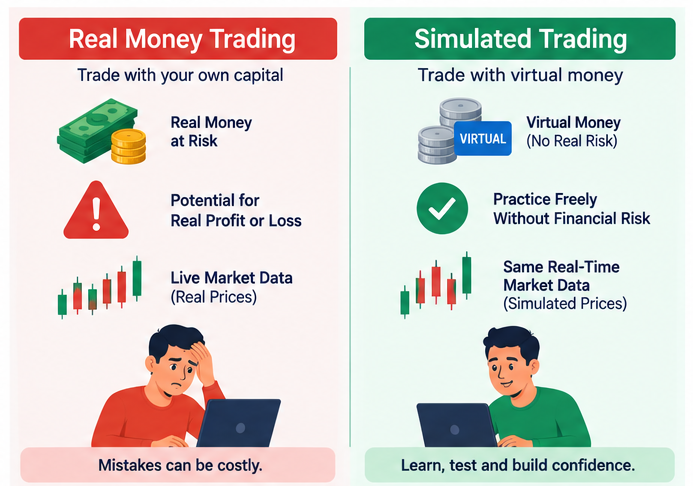
An option trading simulator lets you practice buying, selling and tracking options with virtual money — so you can test an idea before a single rupee of real capital is at risk.
Have you seen Nifty or Bank Nifty options swing 30% within an hour and wondered whether that move was predictable? Nifty and Bank Nifty options — you can test whether that prediction would have come true – without incurring losses as part of learning the hard way!
SEBI research shows that individual F&O traders generally lose money, often attributable to one central cause: trading real capital without first testing out ideas in practice accounts first. A simulator reverses this order – you place trades first in practice accounts to monitor premium, Greeks, account balance and any potential complications, before making your final determination on whether this strategy deserves real capital investment or not.
This guide explores what an option trading simulator does and which free tools (especially Indian markets ) make the best use of one as well as ways it can benefit trading instead of just seeming like another game.
What Is an Option Trading Simulator?
What Are My Options Trading Simulators Available Options Trading Simulators are used as simulation platforms that simulate options trading.
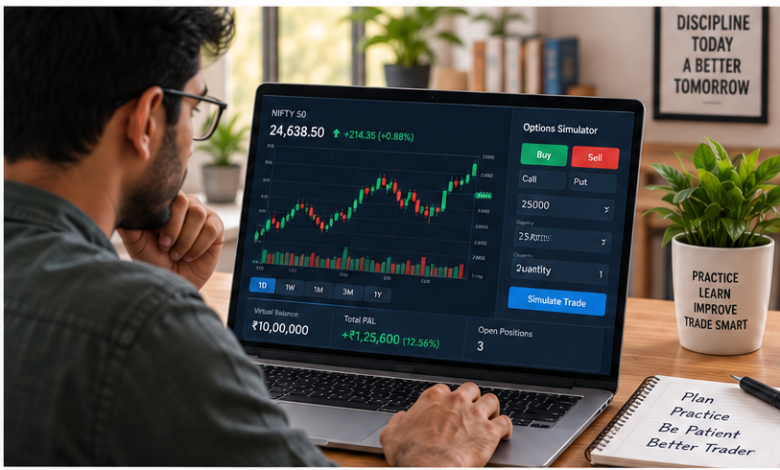
An option trading simulator is an online tool that enables traders to buy and sell options contracts using virtual money instead of real capital, showing prices drawn either live from markets or historical information. Once orders have been placed – for calls or puts or spreads — users can watch how their position’s value changes with time as the underlying stock or index moves or with passing time.
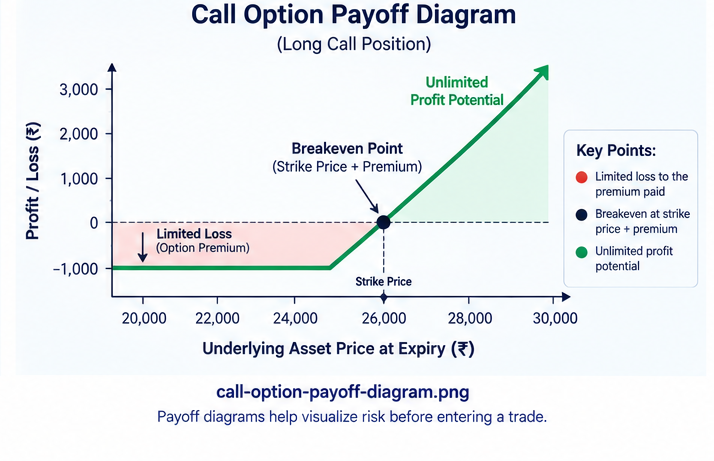
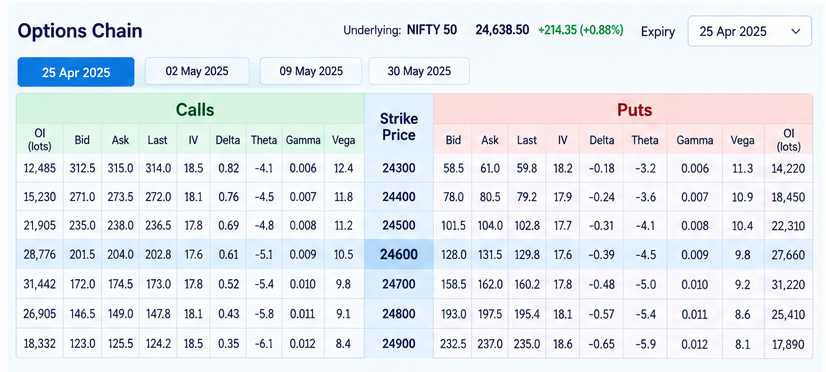
Better simulators go beyond simply tracking profit and loss; they also display option Greeks such as delta, theta, vega and others as well as payoff diagrams and margin requirements – this matters because options differ significantly from stocks; when it comes to tracking price alone an options simulator must also account for time decay and volatility to effectively reflect how they function in reality.
Simulators typically fall into one of two categories.
Live paper trading allows traders to operate with real-time (or slightly delayed) market prices as they happen – it provides the closest thing possible to trading live without risking real funds. Historical replay or backtesting allows for rapid testing of strategies against past market data in order to assess how well they would have fared under different market conditions.
Live paper trading can help build discipline and familiarize traders with order entry screens; backtesting helps verify whether a strategy actually has an edge before putting any trades live or paper, however serious traders usually use both.
Why Practice With Virtual Money Before Trading Live?
Why I Should Make Use of One Before Trading Options Live
Options trading can be harshly punishing to beginners in comparison with plain stock trading; while you might be able to buy and wait out price swings with stocks, time decay works against long options each day you hold onto them, no matter if their prices move or not. When your strike, expiry, or direction are off even slightly your position may suffer significantly as its value declines rapidly if this was your mistake.
Simulators provide you with an opportunity to experiment without incurring financial repercussions, making this tool truly invaluable in terms of:
Learning the way order types such as market, limit, stop-loss work within an options order screen — in particular since options tickets contain more fields than regular equity orders — can help make time decay a visible phenomenon rather than something only read about in text books. Testing multi-leg strategies like spreads, straddles and iron condors that require multiple legs are beneficial as it allows you to get all legs right before placing any trade. practising position sizing and risk management rules before they cost money should they be broken. Before investing real capital on any broker or platform, becoming familiar with its interface is vitally important.
Be candid with yourself about its limitations as well. Simulation fills tend to be too perfect; rarely experiencing slippage, partial fills and sudden liquidity gaps commonplace in real Indian F&O markets with thin volumes; no simulator can fully replicate the emotional strain associated with watching real money slip away as quickly. While paper trading builds mechanical skill and pattern recognition capabilities; it does not fully prepare you for dealing with live losses – treat paper trading only as one element in your preparation strategy and not the whole picture.
Top Platforms for Paper Trading Options in India
Find Out Which Are the Top Option Trading Simulators Available in India
If you trade Nifty, Bank Nifty or Indian stock options, finding an effective simulator which uses real NSE data rather than generic global ones can add real value – since Indian market hours, lot sizes and volatility patterns differ significantly from US ones.
Sensibull is one of the most frequently utilized options-focused platforms among Indian traders and offers virtual trading alongside live strategy and analytics tools. Since it specializes in options trading specifically, its payoff diagrams and multi-leg tools tend to be more detailed than general stock simulators.
Streak is an online platform developed by Zerodha that emphasizes backtesting and rule-based strategy testing rather than live paper trading; making it useful if your goal is determining if an idea stands up when tested against historical data before commencing live trading of it.
AlgoTest excels at structured strategy testing and backtesting specifically tailored towards options trading, making it especially helpful once you move beyond “learning how a call option works” towards testing defined strategies such as iron condors or credit spreads.
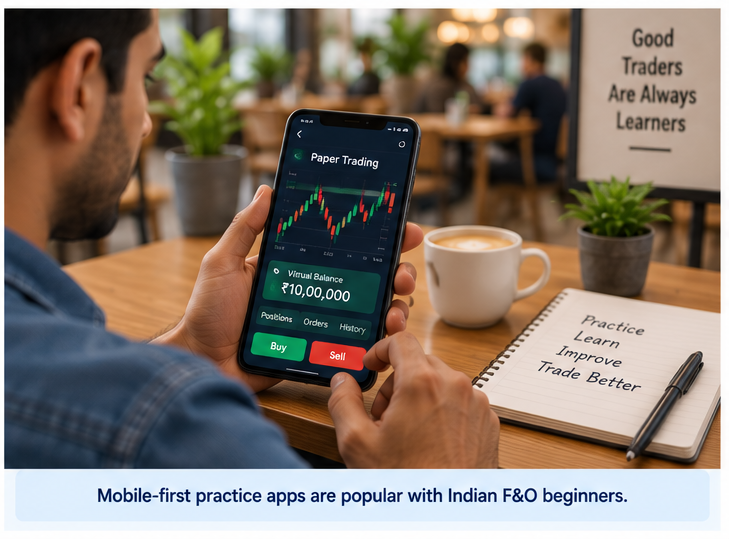
There are various broad paper trading apps for Indian F&O as well, such as free apps that give virtual capital (often an amount like Rs10 lakh) so you can trade NSE stocks, options and futures using live or near live data. These tend to work best for beginners who seek an app-based experience with community or leaderboard elements; though their depth of options-specific analytics varies significantly across apps; before relying solely on one for options practice specifically it would be wise to check that particular one actually provides Greeks and payoff diagrams before trusting it completely for options practice practice specifically.
TradingView’s built-in paper trading tool is another option utilized by Indian traders for chart-based practice, though its main use cases involve global markets rather than NSE/BSE options – this makes it better suited for honing chart reading skills than simulating options contracts themselves.
As one of the subkeywords here is “option trading simulator Reddit”, online communities like r/IndianStreetBets and r/optionstrading offer useful opportunities to evaluate simulators before devoting time or effort towards them – they provide great avenues for peer support before diving deeper. Be wary, however, as results posted there should only ever be taken as evidence against one strategy being effective!
Free Virtual Trading Tools Outside India
Knowing Which Free Global Simulators Are Valuable
If you want exposure to US-style options trading or are considering platforms outside India, certain names appear frequently:
Investopedia’s stock simulator gives new traders an ample virtual capital reserve and covers both stocks and basic options – providing more support for complete beginners rather than advanced multi-leg strategy testing. thinkorswim’s paperMoney (now owned by Charles Schwab) is widely renowned as one of the most feature-packed simulators available, providing virtual capital and access to virtually the full toolset available from live platforms – such as complex multi-leg order functionality. Interactive Brokers’ paper trading account features an attractive notional balance and realistic order execution across stocks, options and futures – but is intended more for experienced traders rather than complete novices; typically requiring setting up an IBKR account before use.
Fidelity’s Options Practice Tools Explained
Does Fidelity Offer an Option Trading Simulator?
Fidelity does not currently offer a full-featured paper trading account similar to what some other brokers provide, however there are tools in its Learning Center designed for practicing options trading – more guided educational walkthroughs rather than live trading environments that simulate order execution and fills.
Fidelity users looking for an immersive paper trading experience typically turn to separate tools – thinkorswim’s paperMoney or Interactive Brokers’ paper account are two recommended alternatives – to practice before returning back into Fidelity to conduct actual trades. Always visit Fidelity directly before assumint something exists or doesn’t, since brokers add and remove tools regularly.
Practicing Options Trading in Canada
Options Trading Simulators in Canada
Canadian traders may encounter slightly fewer choices when trading the TSX than US traders; not every simulator supports Canadian accounts or currency or the exchange itself. Here are a few things worth noting for Canadian traders:
Interactive Brokers also offers Canadian users a full paper trading account that covers stocks, options, futures and forex – with realistic order execution capability – without incurring fees for trade execution or order management services. Moomoo features an inbuilt paper trading feature to facilitate practicing options trades in an artificial real-time environment, along with tools such as an options calculator. Some Canadian brokerages, including Qtrade, have developed options-analysis tools which simulate potential outcomes at various strike prices — making scenario testing possible even where live paper trading accounts don’t exist. The Toronto Stock Exchange (TSX) and its parent, TMX Group have long provided newcomers to trading a free practice trading account offering all TMX listed securities; perfect for beginners looking for a simple yet no cost way to begin investing.
As with any broker feature, availability and specifics may change; so before concluding a certain account type is currently supported on their site it would be wise to verify directly through them first.
Getting the Most Out of Your Practice Account
How Can A Simulator Actually Benefit Me?
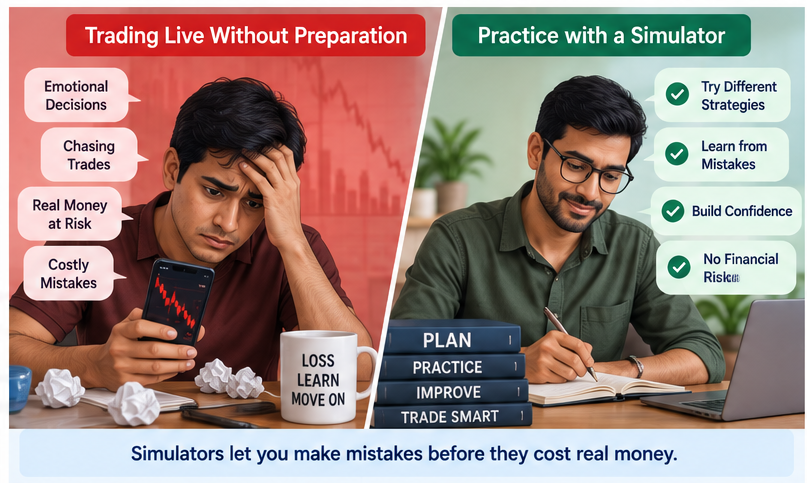
Starting a simulator account and clicking “buy” randomly won’t teach much by itself; to extract maximum value out of one requires some structure:
Make virtual account sizes similar to what you would actually use and follow similar position-sizing rules when trading live; betting all your virtual balance in one trade doesn’t teach anything useful! Before entering into any trade, take time to write out and outline your rationale – why you want to take it, what would prove you wrong and where your exit points will be – then compare that document with what actually transpired afterward. Keep a record of your trades over weeks rather than days – not days – rather than trying to form conclusions from just a handful of trades in a simulator. Allow for at least several weeks of consistent practice before drawing any definitive conclusions about which strategy worked. Acknowledging both wins and losses are integral parts of paper trading; their purpose lies in learning what goes wrong and why. After all, real-money trading makes this lesson very costly to master! As soon as your simulator experience has proven consistent, move to live trading with small amounts of real capital once ready. Since simulators cannot replicate real losses’ psychology and can’t replicate real losses accurately enough, when transitioning from simulator to live trading it should typically start off small; not large.
When You’re Ready to Trade Options Live
When You Are Ready for Live Trading
No set number of practice trades defines when one is ready; rather, what matters more is whether you can explain, clearly and simply, why each trade worked or failed and consistently adhere to your risk rules across both winning and losing trades. If basic mechanics still surprise you – such as how quickly an option loses value near expiry or how margin works on spreads – keep practicing rather than transition to real money trading immediately.
Option trading involves real financial risk when real capital is involved, and past simulated performance cannot guarantee future real world results. Therefore, for newcomers to F&O trading it would be prudent to combine simulator practice with SEBI investor education resources as well as guidance from an SEBI-registered advisor; otherwise it is wiser not to rely solely on simulator practice alone.
Option Trading Simulator FAQs
D.Frequently Asked Questions
Does an option trading simulator actually cost nothing? Most well-known ones – like Sensibull’s virtual trading, Streak, several National Stock Exchange-focused paper trading applications, and TradingView’s paper trading tool — feature some form of free tier. Some platforms reserve more advanced analytics or backtesting features for paid plans so it would be wise to do your own due diligence on which features are included before presuming full access is free.
Are Nifty and Bank Nifty options specifically accessible to me? Yes. Many India-specific simulators and paper trading apps support NSE data to give access to NSE index options – providing exactly the environment needed if your goal is learning Indian-style F&O rather than US equity options.
Does simulator performance reflect how I will do with real money? Not always; simulators tend to provide cleaner fills than you will find live, while emotional pressure of watching real cash move cannot be replicated on simulator results alone. So use simulator results as a baseline measure of mechanical skill rather than guarantee of live results.
Are there any good mobile option trading simulator apps? Yes – multiple Indian paper trading apps provide mobile trading simulator apps which let users practice NSE options trading from a phone with live-market simulation – ideal if you want to simulate how trading actual options would feel on a day-to-day basis.
Does Fidelity offer an option trading simulator? No. Fidelity’s practice tools serve more as educational than live practice environments; many Fidelity users practice with thinkorswim’s paperMoney or Interactive Brokers’ paper account instead.
What’s the Best Free Option Trading Simulator for Complete Beginners? For someone starting from scratch in options trading, simpler tools like Investopedia’s simulator (for general options mechanics) or an India-focused app with large virtual balance and live NSE data might make trading simpler than professional grade platforms like Interactive Brokers which require more prior knowledge to operate effectively.
Are Reddit discussions related to options trading simulators reliable? While Reddit provides an effective space to compare tools used by actual traders, take any individual reports of results with caution as these could only represent individual experiences; consider them useful only as tool comparison platforms rather than to verify whether a given strategy actually yields profitable outcomes.
In short: an option trading simulator remains one of the most effective ways to practice options strategies before committing real capital.