Your common financial advice probably follows these three paths: diversify, invest for the long term and don’t time the market. While that advice might sound good in theory, no one tells you how to choose an investment strategy tailored specifically for you or addresses what happens if one piece of advice contradicts another one. Having spent years testing various approaches with real money (some I would rather forget!), and this guide was one I wish existed when I began investing: no fluff nor “in today’s world” openers — simply what works and what doesn’t — plus why.
What an “Investment Strategy” Actually Encompasses (And Why Many Individuals Miss This Step)
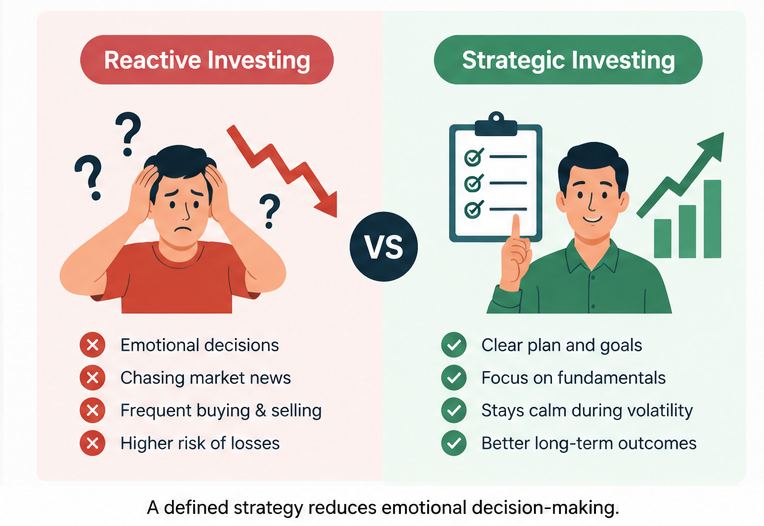
An investment strategy is more than simply picking stocks or tips; it is the set of rules you follow before buying anything – such as how much, when, why and for how much. Beginners tend to jump right to “what should I buy”, without first answering these important questions first – leading them to panic sell when their stocks drop by even 15%!
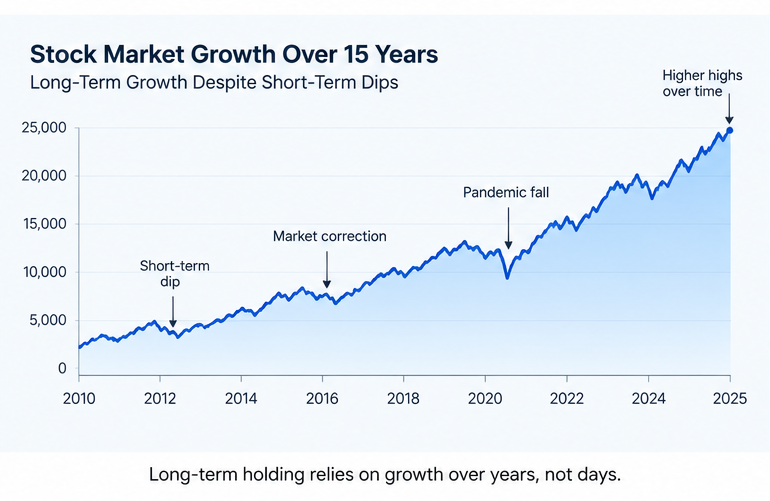
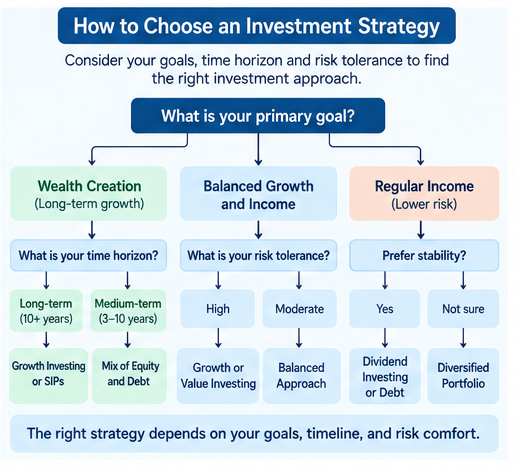
Your investment strategy must address four fundamental considerations: your time horizon, risk tolerance, potential contributions monthly and desired involvement level. By answering those four questions honestly and comprehensively, half the argument regarding what strategy works best will dissipate – as ultimately it all boils down to what works for YOU as an individual investor.
Value Investing: Acquiring Businesses, Not Tickers
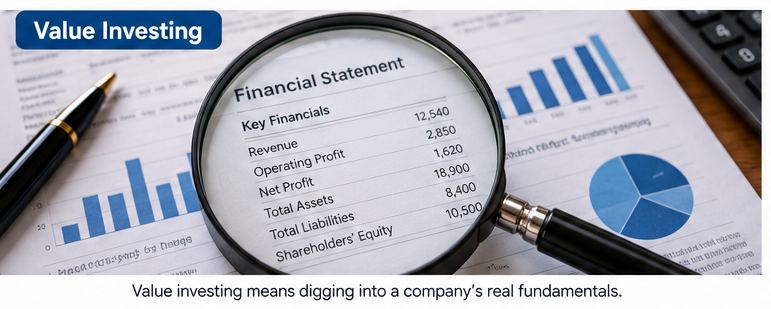
Value investing entails buying shares at prices lower than their intrinsic business worth and then waiting – often for years – until investors recognize its true worth. Warren Buffett may not have created value investing (that honor belongs to Benjamin Graham), but thanks to him it has become more well known than ever.
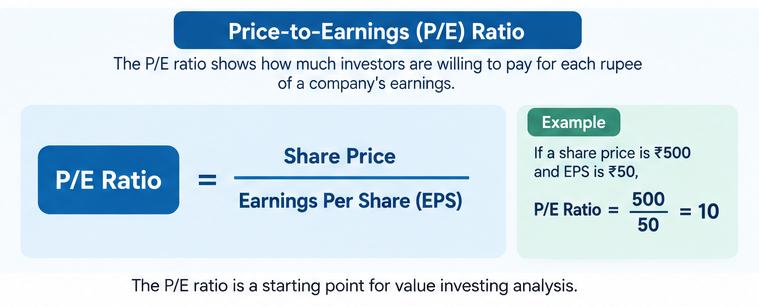
Value investors often rely on five core metrics when making investment decisions:
- P/E ratio relative to industry standard
- Price-to-book value trends over five+ years
- How much debt the company is carrying relative to shareholder equity
Few investors acknowledge this truth: A stock can appear cheap while still representing an undervaluation risk; I found out this lesson the hard way by buying what seemed to be an outstanding retail stock at what looked like an incredible value in 2019. Unfortunately, its business was actually declining over two more years instead of undervalued; cheap is not synonymous with good, and no ratio alone will tell you which it is!
Growth Investing: Paying More for Rapid Expansion
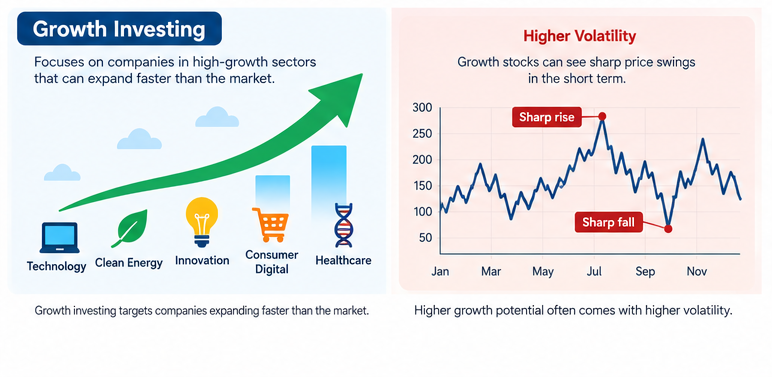
Growth investors typically accept higher valuations in exchange for businesses expanding revenues and earnings faster than average; think early-stage technology or healthcare innovators — companies reinvesting profits back into growth instead of paying out dividends – offering higher valuations as they expand revenue and earnings faster.

Growth stocks often exhibit greater market volatility; their values often swing harder back and forth. A 30% drawdown shouldn’t signal alarm; rather it should serve as another reminder. If this kind of swing would make you panic sell your investments too soon then growth investing probably isn’t your cup of tea, regardless of what returns look good on paper.
Dividend Investing: Getting Paid While You Hold On
With dividend investing, you’re hunting for stocks that consistently pay out cash, so you get income flowing in without ever having to sell a single share. Retirees and anyone needing cash are frequently interested in this approach to investing.
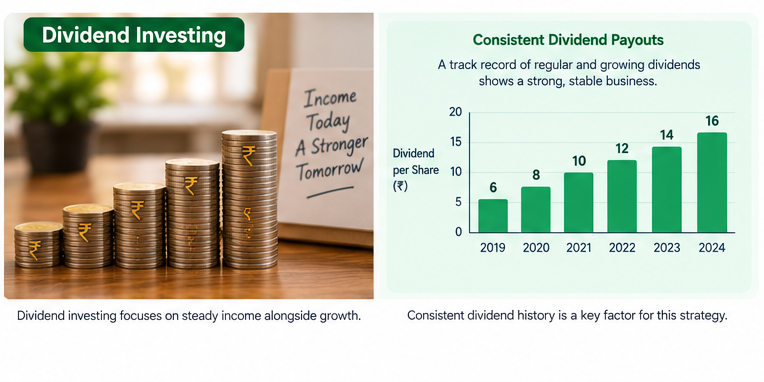
Key factors to keep in mind before seeking high yield returns:
- Payout ratio — Anything consistently exceeding 80% should serve as a warning signal that the dividend may not be sustainable
- Growth history — Five+ years of consistent dividend increases matter more than simply looking at current yield levels
- Free cash flow coverage requires that a company actually generate enough revenue to cover what its expenses require
An unrealistically attractive dividend yield — say 9-10% when the industry average is around 3% — often signals that a company plans on cutting its dividend. As markets already factor in risks associated with these high yields; you are only seeing it now due to coincidence.
Index Fund Investing Is Best Suited to Most People
An index fund that tracks broad market indexes like the Nifty 50, S&P 500 or total market fund may not seem exciting at first, but that is exactly the point: You are accepting the market’s average returns which generally outperform active managed funds over 10+ year time periods after fees.
At odds with much “expert” advice, I will say something here that may surprise some: for most readers of this article, active stock-picking should only ever be treated as a hobby and not an investment strategy – and this is fine as long as your are honest about your motivations for engaging in such activity. If researching individual companies is something you enjoy doing then set aside 5-15 percent of your portfolio specifically for such research; otherwise you should stick with index funds as your main retirement strategy when not engaging in active stock picking professionally. Treating stock picking as your main retirement strategy can cause many portfolios underperform significantly over time and even professionals are surprised that many don’t fare so well in comparison compared to index funds over time.
Dollar-Cost Averaging (DCA): Eliminate Guesswork
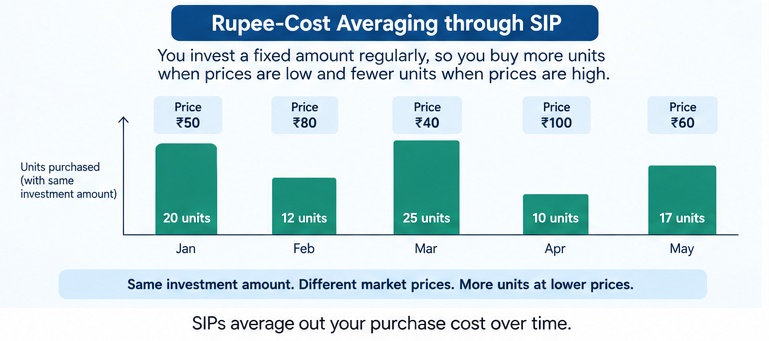
Dollar-cost averaging is the practice of investing a set amount on regular intervals – for instance Rs10,000 every month – without worrying too much about fluctuations in stock prices, thus purchasing more shares when prices fall and less when they soar without needing to predict anything beforehand.

Step-by-Step Guidance for Setting Up a DCA Plan
- Create an investment budget based on what’s affordable – rather than exciting — each month and invest accordingly (index funds, blue chip basket, etc).
- Use your broker’s SIP or recurring-buy feature to automate purchases at fixed intervals over time.
- Set yourself a reminder every six months, without making changes, to revisit and increase the size of your allocation gradually as income rises, instead of trying to time lump sum contributions into your investment strategy.
DCA excels because of the behavioral advantage it brings. By eliminating the temptation of waiting for “perfect” entry points that never arrive – something which happened with me during 2020 when I waited four months before finding one I considered “safe”. Once my buying itch had subsided, 25% more value had already run-up!
Momentum Investing: Following the Trend
Momentum investing consists of buying stocks with rising trends and selling ones with decreasing ones on the belief that these trends tend to continue for an intermediate or short term period. It requires active management with closer monitoring than any of the strategies above.
Momentum investing may not be suitable for everyone; it requires discipline around setting exit rules in case the trend reversals happen – otherwise momentum investing simply becomes buying whatever’s already expensive and hoping.
Comparing Core Strategies Side by Side
| Strategy | Time Horizon | Risk Level | Effort Required | Best Suited For |
|---|---|---|---|---|
| Value Investing | Longer Term (5+ yrs) | Medium-High | Research Intensity | Investors who can tolerate analysis |
| Growth Investing | Long Term | High | Medium-High | Investors who can tolerate volatility |
| Dividend Investing | Long-Term Income | Low | Low | Retirement-focused investors or income seekers |
| Index Fund Investing | Long Term | Low (Market Risk) | Low | Newcomers or hands-off investors |
| Dollar Cost Averaging | Any | Mitigates Timing Risk | Low | Regular monthly contributions with any strategy |
| Momentum Investing | Short to Medium Term | High | High (Active Monitoring) | Experienced traders with active trading experience |
Creating Your Own Strategy That Fits (Not Just Textbooks)
Here is an effective checklist:
- Write out your desired time horizon in years rather than “long term”, not “aspirationally”.
- Determine the maximum portfolio decline you can handle without selling out and panic selling — be realistic and avoid overly positive statements that mislead investors into investing.
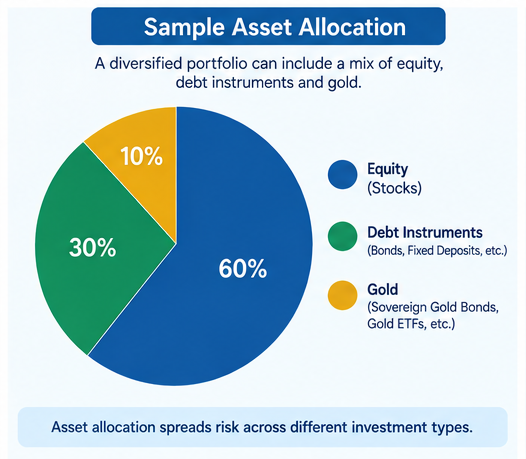
- Split your money up: keep a core of solid, boring investments (index funds or blue-chip dividend payers) and set aside a smaller slice for the active strategies that genuinely interest you. Automate your contributions so the plan keeps running even when your emotions try to talk you out of it, and only revisit your allocation once a year — not every time the market has a bad day. Now let’s look at the mistakes that quietly wreck a good strategy.
Common Mistakes That Undermine a Good Strategy
- Switching strategies after experiencing a poor quarter. Most strategies require several years, not months, to demonstrate success.
- Over-diversifying by adding 40+ stocks you cannot track as this simply recreates an index fund albeit poorly and with higher fees attached.
- Ignoring fees and taxes — they chip away at your returns bit by bit, and over decades that adds up to real money lost.
- Confusing confidence with certainty. Being confident about a stock doesn’t guarantee its performance or rightness in every instance.

Indian Market Considerations
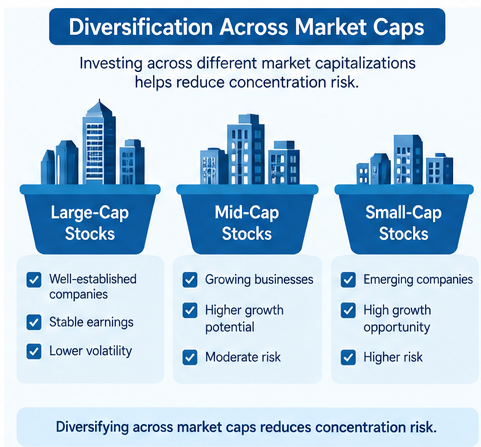
Indian stock investors need to keep several extra factors in mind when investing: SIP (Systematic Investment Plan) structures make dollar cost averaging easy through most brokers; long-term capital gains tax treatment differs from short-term trades; sector concentration (heavily weighting towards financials and IT in broad indices) should also be evaluated before concluding you’ve adequately diversified yourself.

Where This Leaves You
In reality, no single investment strategy in the stock market is guaranteed to work best; only that strategy which you are most likely to maintain through good and bad years should count. Index investing plus DCA tends to work for most people; value, growth dividend and momentum approaches all offer unique approaches with their own merits if an investor has time and discipline required of them – choose wisely according to time horizon, risk tolerance and effort level rather than basing your decision solely off what someone else did online!
FAQs
What is the optimal investment strategy for beginners entering the stock market? In most cases, low-cost index fund investing combined with dollar cost averaging is likely the optimal combination for new investors seeking long-term returns without needing to conduct in-depth company research.
What are the various strategies employed when investing in stocks and shares? Value investing, growth investing, dividend investing, index fund investing, dollar cost averaging, momentum investing are the principal types. Each has their own distinct risks levels and timeline requirements as well as effort requirements.
What is an effective long-term investment strategy in the stock market? An effective long-term investment strategy in the stock market entails investing in diversified index funds with regular contributions (DCA), plus potentially investing in individual stocks that reflect value or growth principles as satellite holdings.
What are my best investment strategies in India’s stock market specifically? SIP-based index fund investing has proven popular as it automates dollar cost averaging, keeps costs low, and aligns with long-term capital gains tax treatment – though sector concentration may need further scrutiny.
How can I select an investment strategy that best meets my needs? Take time to answer four honest questions about yourself; these include your time horizon, portfolio drop tolerance levels without panic-selling, regular contributions amount and research hours spent researching potential strategies – your answers should point in the direction of finding what may be the right investment solution.
What should you choose, individual stock picking or index funds? For most investors without enough time or interest in researching individual companies in depth, index funds outshone stock-picking over long periods after fees; individual stock-picking could add value as part of an overall portfolio for those truly passionate about doing so.