
Option Trading Strategies: A Practical Guide for Indian Traders
Options get sold to new traders as a shortcut — a way to make quick money with a small amount of capital. The reality is messier. Options get pitched to new traders as a shortcut — a small amount of money, a big potential payoff. The truth is less flattering. Used well, options are a solid way to manage risk or back a specific view on the market. Used carelessly, they’re also one of the fastest ways to lose money, and SEBI’s own numbers back that up: most individual F&O traders in India lose money over time, not just occasionally.
None of this means options are a bad tool. It means the strategy you pick, and how you size your risk, matters far more than which “hot tip” you follow. This guide walks through how option strategies actually work, the ones Indian traders use most often, and the practical realities — lot sizes, costs, and current SEBI rules — that shape how you can trade them in 2026.
What an Option Strategy Actually Means
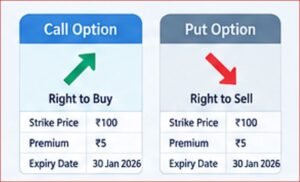
So what is an option, mechanically? It gives you the right — not the obligation — to buy (a call) or sell (a put) something at a fixed price before a set date. Buyers pay a premium for that right. Sellers collect it, and take on the obligation instead. That’s the whole trade at its core.
A “strategy” simply means combining one or more option positions — sometimes with the underlying stock or index — to create a specific risk-and-reward shape. Some strategies are built to profit if a stock rises. Others are built to profit from a stock going nowhere. A few are built purely to protect an existing position from a sharp move.
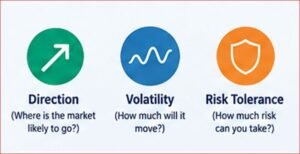
Before you touch a strategy, sit with three questions for a second. Where do you actually think the price is going? Is this a big-move setup or a quiet one? And realistically, how much are you willing to give up if you’ve got it wrong? And how much are you actually okay losing if you’re wrong? Every strategy below is really just a different answer to those three questions. Every strategy below answers those three questions differently.
How India’s F&O Market Has Changed
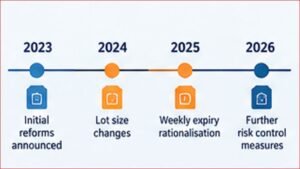
If you learned about options a few years back and are only now getting around to trading, know that the rules underneath you have shifted. SEBI has spent the last few years reworking index derivatives specifically, because that’s where most of the retail speculation was happening.
A few changes worth knowing before you place a trade:
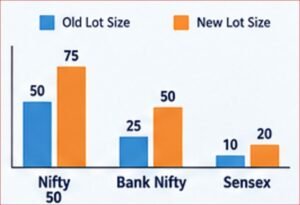
- Larger lot sizes. SEBI raised the minimum contract value for index derivatives, which pushed up lot sizes for Nifty, Bank Nifty, and Sensex contracts. This means each lot now requires more capital than it used to, whether you’re buying or selling.
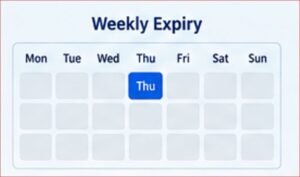
- Fewer weekly expiries. Each exchange can now offer weekly expiry on only one benchmark index. NSE runs weekly expiry on Nifty 50; Bank Nifty and Fin Nifty now trade only monthly. BSE runs its weekly expiry on Sensex. This has changed how expiry-day strategies are built, since the old multi-index weekly expiry calendar no longer exists.
- Upfront premium collection. Brokers must now collect the full option premium from buyers upfront, closing the leverage loophole that some intraday products used to offer.
- Higher transaction costs. Securities Transaction Tax (STT) on options has gone up in recent budget cycles, which matters more for strategies that involve frequent buying and selling.
None of this stops you from trading. It just means a single lot now needs more capital behind it than it used to, and some of the old “cheap weekly options” playbooks don’t hold up the same way. Check your broker’s current lot sizes and margin numbers before you place anything — exchanges update these more often than most people realize.
Directional Strategies: Betting on a Move
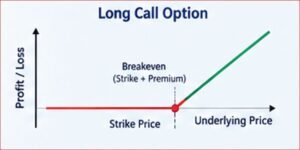
Long Call The simplest bullish bet there is. Pay a premium, and if the price climbs past your strike plus what you paid, you’re in profit. Your downside is capped at the premium — which is exactly why beginners gravitate toward it. The catch: time is working against you the whole time you hold it. Being right about direction eventually isn’t the same as being right in time.

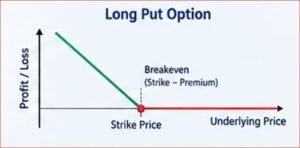
Long Put The mirror image of a long call. You buy a put when you expect the price to fall. Many traders also use puts purely as insurance on an existing stock holding, which brings us to the next strategy.
Protective Put Own shares and nervous about a dip — earnings season is the classic case? Buy a put on them. It’s insurance, plain and simple. If the stock drops, the put gains value and cushions the blow. If it doesn’t drop, you’re out the premium, same as an insurance policy you never had to claim.
Covered Call Flip the logic. You’re holding shares, you don’t expect much movement soon, so you sell a call against them and pocket the premium. Stock stays flat or creeps up a bit — you keep that income. The tradeoff shows up if the stock actually rallies hard: you’re on the hook to sell at your strike, so your upside gets cut off right there. It’s a favorite among people who were holding the stock long-term anyway and want it to earn a little extra along the way.
Spread Strategies: Limiting Risk on Both Sides
Spreads combine a spread pairs a bought option with a sold one of the same type. You give up some of your maximum profit, but you also lower your cost and cushion your downside compared to a naked long option.

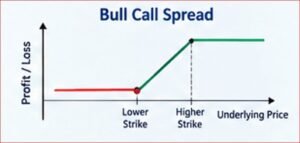
Bull Call Spread Buy a call at a lower strike, sell one at a higher strike, same expiry. The premium from the short leg offsets part of what you paid, so your breakeven comes down. Good fit when you’re moderately bullish but not betting on a blowout move. In exchange, your maximum profit is capped once the price crosses the higher strike.
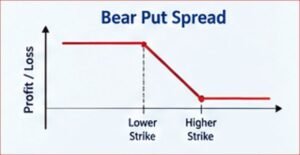
Bear put spread Same idea, flipped for a bearish view — buy a higher-strike put, sell a lower-strike one. Cheaper than a plain put, capped upside, useful when you expect a decline but not a crash.
Why bother with spreads at all? Because a single option outright can be pricey, and time decay chips away at it every single day you hold it. Selling the second leg brings your cost down — you’re just trading away some of the top end of your profit to do it. By selling another option against your position, you reduce your net cost and your sensitivity to time decay, at the price of a lower ceiling on profit. For traders working with the larger lot sizes now required for index options, spreads can also reduce the capital and margin needed compared to buying options outright.

Volatility Strategies: Betting on Movement, Not Direction
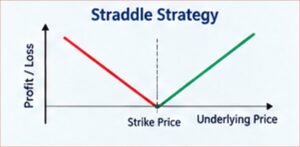
Long Straddle Buy a call and a put at the same strike price and expiry. This profits if the underlying makes a large move in either direction — useful around events like results announcements, RBI policy decisions, or budget day, when you expect volatility but aren’t sure which way it will break.
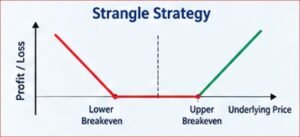
Long Strangle Close cousin of a straddle, but you’re buying an out-of-the-money call and put instead of at-the-money ones. Cheaper premium overall, but the market needs to move further before you’re actually profitable.

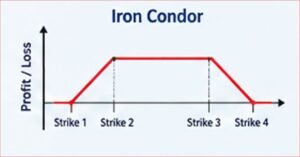
Iron Condor More moving parts — a bear call spread and a bull put spread stacked on the same underlying and expiry. It pays off if the price just sits inside a range through expiry, and your loss is capped if it breaks out either way. Iron condors are popular with traders who believe an index will stay relatively calm, particularly during periods without major scheduled events. They require more margin and more careful position sizing than a simple spread, since you’re managing four separate option legs at once.
Risk Management Comes Before Strategy Selection
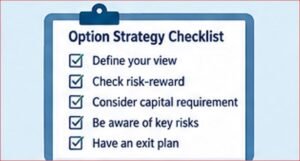
None of these strategies matter much if you’re sloppy about position sizing. A few habits do more heavy lifting than the strategy choice itself.
- Decide your maximum loss before entering, not after. Know exactly what you’re willing to lose on a single trade, in rupees, before you place it.
- Size positions to your capital, not your conviction. A single Nifty or Bank Nifty lot now represents a larger notional value than it used to under the revised lot sizes, so the same “one lot” trade carries more risk than it did a few years ago.
- Understand time decay. Options bought close to expiry lose value fast if the market doesn’t move quickly in your favour. This is one of the most common reasons beginners lose money even when they’re directionally right.
- Track total cost, not just the premium. Brokerage, STT, and other charges add up, especially for strategies involving multiple legs or frequent trading.
- Avoid strategies with unlimited loss potential until you fully understand margin requirements. Selling naked calls or puts without a hedge can expose you to losses far larger than your initial premium received.
Matching a Strategy to Your Market View
A simple way to think about strategy selection is to separate your view on direction from your view on volatility:
- Bullish, expect a moderate move: bull call spread
- Bullish, want unlimited upside and can absorb full premium loss: long call
- Own shares, want income, expect limited upside near-term: covered call
- Own shares, worried about a near-term drop: protective put
- Bearish, expect a moderate move: bear put spread
- Expect a big move but unsure of direction (before an event): long straddle or strangle
- Expect the market to stay range-bound: iron condor
This isn’t a formula for guaranteed profit — no combination of strategy and market view removes the risk of being wrong. It’s simply a way to make sure the strategy you choose actually matches what you believe will happen, rather than picking a strategy because it’s popular on social media.
A Note on Taxes and Costs
Profits from options trading in India are typically treated as business income (speculative or non-speculative, depending on the specifics) rather than capital gains, and are taxed according to your income tax slab. Securities Transaction Tax applies on options trades and has increased in recent years, along with brokerage and exchange charges. Because tax treatment and STT rates are revised periodically and depend on your individual circumstances, it’s worth confirming current rates with your broker or a tax professional before trading, rather than relying on last year’s numbers.
Getting Started Responsibly
If you’re just starting out, stick to trades with a defined, known worst case — long calls, long puts, basic spreads — before you go anywhere near uncovered option selling. Give yourself time to actually understand margin calls before you’re staring at one in real time. Paper trading, or trading tiny size for a few months, teaches you more than reading ever will.
Options aren’t reckless by nature, and they’re not a shortcut either — they’re tools. With a real plan and honest limits, they can manage risk or express a view with a downside you actually chose. Without that discipline, the same flexibility that makes them useful is exactly what makes them easy to blow yourself up with.
FAQs
1. Which option strategy is best for beginners in India? Simple, defined-risk strategies like a long call, long put, or a basic bull call/bear put spread are generally considered more beginner-friendly, since your maximum loss is known before you enter the trade. Strategies involving naked option selling carry higher and sometimes unlimited risk and are usually better attempted after you understand margin requirements in detail.
2. How much capital do I need to start trading options in India? This depends on the underlying and current lot size, which SEBI has revised in recent years, pushing minimum contract values higher for index options. Check your broker’s current margin and lot-size requirements for the specific contract you want to trade, since these are updated periodically.
3. Can I lose more money than I invest in options trading? If you’re buying options (a call or put), your maximum loss is limited to the premium you paid. Sell options without a hedge and your losses can run well past whatever premium you collected — which is the whole reason writing options demands more margin and more experience than buying them.
4. What’s the actual difference between buying and selling options? Buyers pay a premium for the right to exercise the option and have limited, known risk. Sellers collect the premium but take on the obligation to fulfil the contract if the buyer exercises it, which can mean larger and less predictable risk, particularly for uncovered positions.
5. Do SEBI’s new F&O rules affect which strategies I can use? They don’t ban specific strategies, but they’ve changed the practical conditions around trading — larger lot sizes, fewer weekly expiry options (Bank Nifty and Fin Nifty are now monthly-only, for example), and mandatory upfront premium payment for buyers. These changes affect the capital required and the expiry calendar available for strategies like weekly straddles or expiry-day trades.
6. Do you have to be a short-term trader to use any of this? Not really. Covered calls and protective puts get used by long-term shareholders all the time, just for income or hedging rather than speculation. Straddles around a single event, or short-dated spreads — those are the short-term end of the spectrum. It depends on what you’re using the position for. The strategy should match your actual holding period and objective, not the other way around.
7. Is options trading taxed differently from stock market gains in India? Generally, income from options trading is treated as business income rather than capital gains and taxed as per your applicable income tax slab, unlike long-term equity gains which have separate capital gains treatment. Because rules and thresholds can change with each budget, confirm current treatment with a qualified tax advisor.
8. Is this riskier than plain stock investing? It can amplify both directions relative to what you put in, and time decay works against option buyers even when the price isn’t moving against them. SEBI’s own data shows most individual F&O traders lose money over multi-year stretches — worth keeping in your head no matter which strategy you’re running.