
If you scalp Nifty, Bank Nifty, or individual stocks on the 1-minute or 5-minute chart, you’ve probably had this experience: you spot a clean setup, enter with confidence, and get stopped out within seconds — only to watch the price move exactly the way you expected, just a few minutes later and without you in the trade.
This isn’t bad luck showing up over and over. It’s usually a sign that the stop loss was placed based on a fixed number of points or a gut feeling, rather than on how the instrument actually moves. Scalping is a game played in small price increments, and small increments are exactly where random noise lives. Set your stop too close to your entry, and ordinary noise will take you out before your actual trade idea gets a chance to work.
This article breaks down why premature stop-outs happen so often in scalping, and gives you a structured way to place stops that separates “the trade is wrong” from “the market just breathed.”
Why Scalpers Get Stopped Out Too Early
Three mechanics work against a tight, arbitrary stop loss.
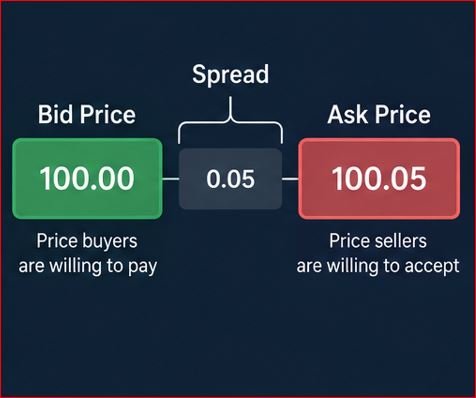
1. Bid-ask spread and order execution. Every time price moves, it isn’t moving in one smooth line — it’s ticking between the best bid and best ask, sometimes with brief gaps if liquidity thins out for a moment. On a five-point stop, a single wide tick or a fast two-sided sweep can trigger your exit even though the broader move hasn’t actually reversed.
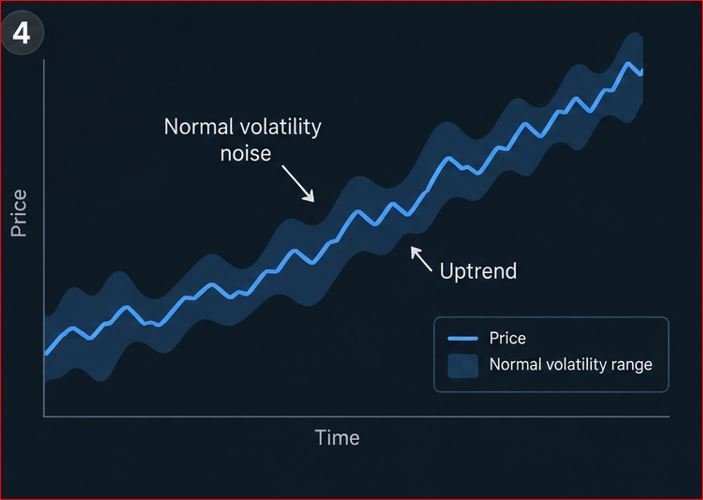
2. Short-term volatility (noise) versus trend. Every price series has a “noise band” — the normal back-and-forth wiggle that happens even during a clean directional move. If your stop sits inside that noise band, you’re not really testing your trade thesis; you’re just waiting for the coin flip of random noise to go against you first.
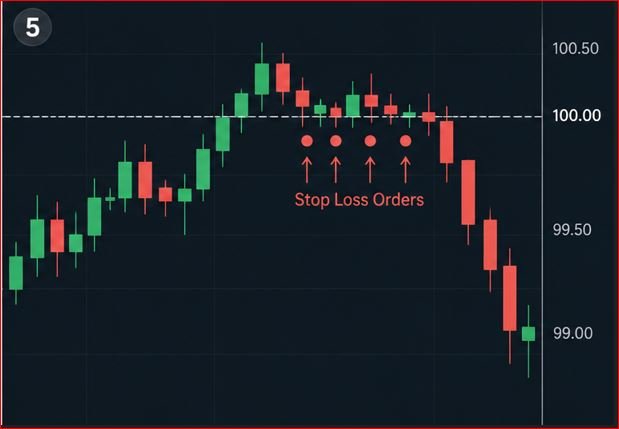
3. Round numbers and stop clusters. Many retail traders place stops at similar, predictable distances — just below a recent low, or a round number like a 20-point range. When enough traders do this, that area becomes a magnet for a quick sweep before price resumes its original direction. If your stop sits exactly where everyone else’s does, you’re more exposed to this kind of shake-out.
None of this means “use a wider stop and hope for the best.” It means the size and placement of your stop should be based on how the instrument is actually behaving right now, not on a static number you’ve always used.
Step 1: Base Your Stop on Volatility, Not a Fixed Point Count
Here’s the thing about a stop that feels fine on a quiet Tuesday morning — it can get run over completely once Nifty futures start moving during a Budget day or an RBI announcement. Same instrument, same stop distance, completely different market.
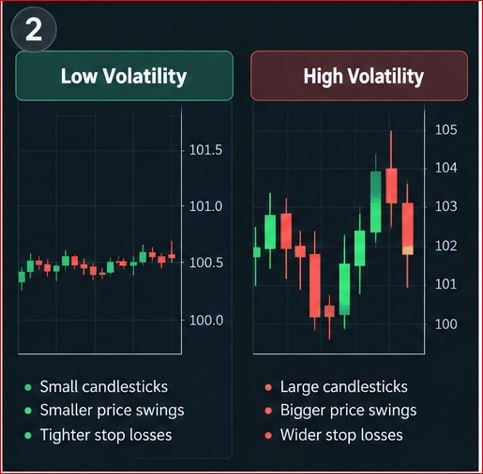
ATR isn’t just the high minus the low of a candle. It looks at the average distance an instrument has actually traveled over a set number of candles, gaps included, so it picks up on real volatility rather than a single bar’s shape.A common scalping approach is:
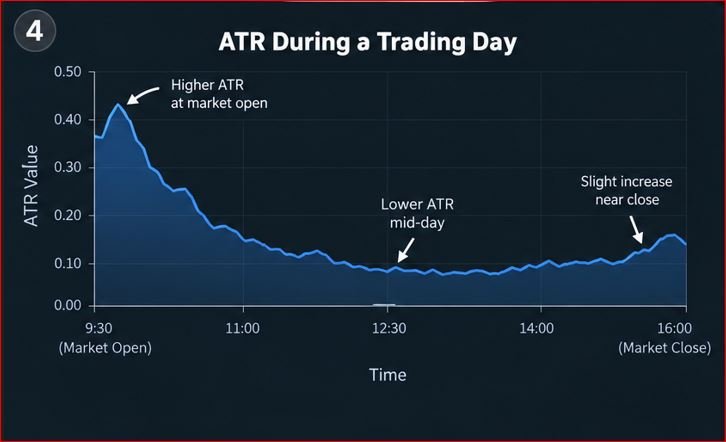
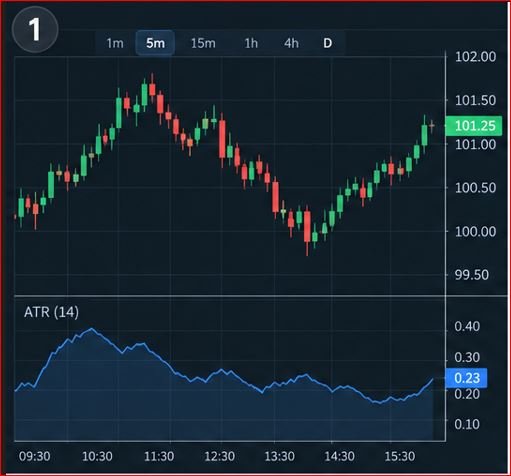
In practice, that means running ATR on a timeframe close to how long you actually hold a trade — a 14-period ATR on a 1-minute or 5-minute chart works for most scalpers. From there, your stop becomes a multiple of that value, maybe 0.5x, maybe 1.5x, depending on how much wobble you’re okay sitting through, instead of some flat number of points you’ve used since day one. And because ATR isn’t static — it stretches out near the open and around news, then settles down mid-session — it’s worth checking back on that number a few times through the day rather than setting it once and forgetting it.
This way, your stop distance automatically adjusts to the day’s actual conditions instead of staying frozen at whatever number felt right yesterday.
Step 2: Anchor Your Stop to Price Structure, Not Just Distance
Volatility gives you a size for your stop. Price structure tells you where to actually place it.
Instead of counting points backward from your entry, look at the chart itself:
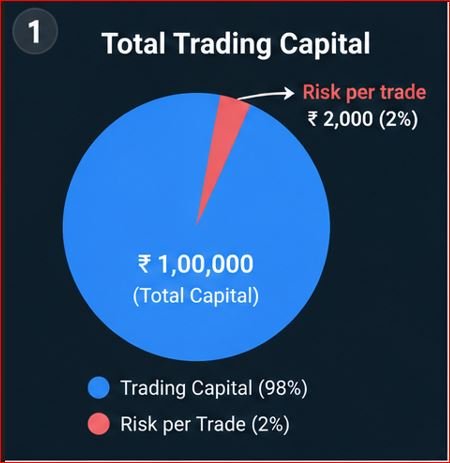
- Below a swing low or above a swing high that formed the basis of your entry — if that level breaks, your original reason for the trade is no longer valid.
- Beyond a consolidation range, if you’re trading a breakout — placing the stop back inside the range you just broke out of, rather than a few points beyond the breakout candle.
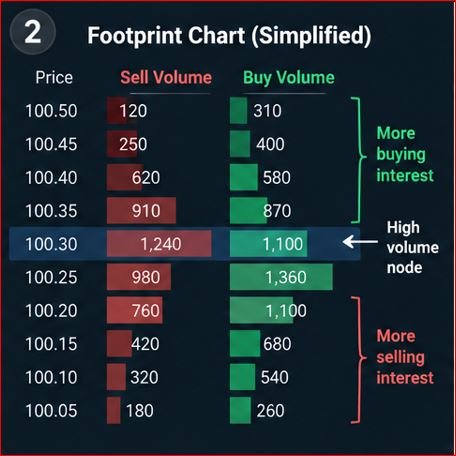
- On the other side of a clear order-flow shift, if you use tape reading or footprint charts — for instance, past the point where aggressive selling clearly took over from buying.
The goal is for your stop to sit at a point where, if price reaches it, your trade idea is genuinely disproven — not at a point that’s simply “close enough to lock in a small loss.”
Step 3: Combine Both, Then Check the Risk-Reward Math
Once you have a structure-based level and a volatility-based distance, use them together:
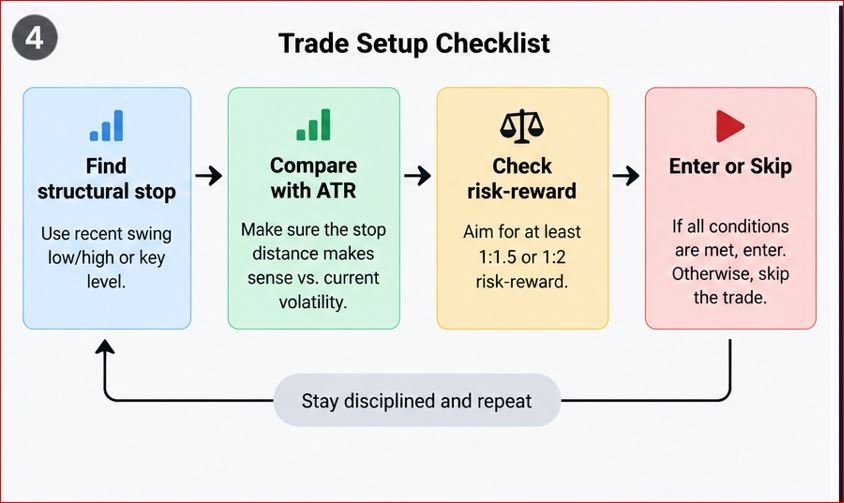
- Identify the structural invalidation point (Step 2).
- Check whether that distance is at least in the same range as your ATR-based calculation (Step 1). If the structural stop is much tighter than the ATR suggests, it may still be inside the noise band and prone to a premature shake-out.
- If the structural stop is far wider than your ATR multiple suggests it needs to be, consider whether the setup itself is too far from a clean invalidation point to make sense as a scalp — that may be a signal to skip the trade rather than force a stop.
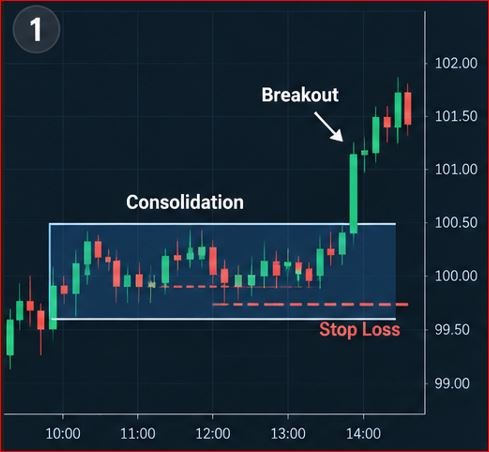
This is also the moment to check your risk-reward ratio. If your realistic target is 15 points but your structurally sound stop is 25 points away, the math doesn’t favor the trade, no matter how good the entry looks. In scalping, where win rates and reward sizes tend to be modest per trade, a poor risk-reward ratio compounds quickly across a full day of trades.
Step 4: Size Your Position Around the Stop, Not the Other Way Around
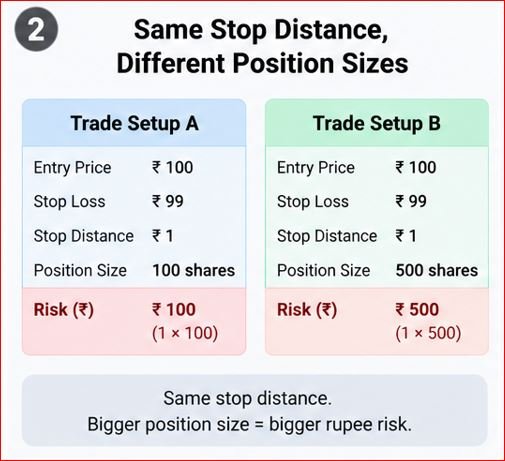
A frequent mistake is deciding on a lot size first, then squeezing the stop loss to fit a comfortable rupee risk. This reverses the correct order of operations and is precisely what leads to stops sitting inside the noise band.
Instead:
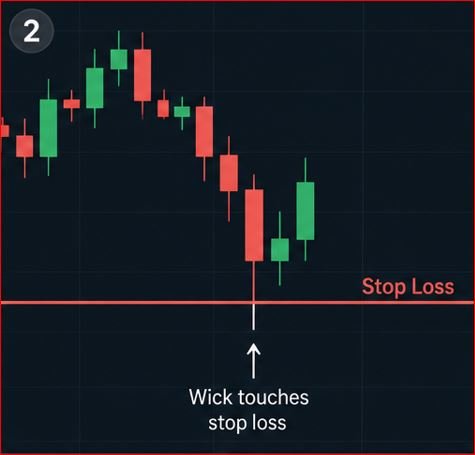
- Decide your maximum risk per trade in rupees (many traders use a fixed percentage of trading capital, kept small enough that a string of losses doesn’t meaningfully damage the account).
- Determine your stop distance using Steps 1–3.
- Calculate the position size (quantity or lots) that keeps your rupee risk within that limit, given the stop distance.
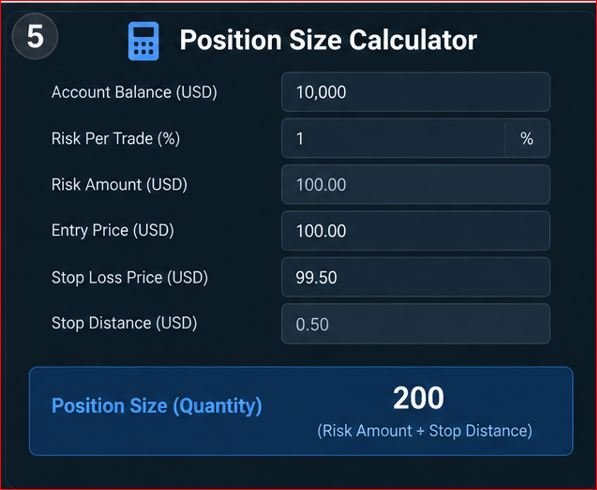
If the resulting position size feels too small to be worth the trade, that’s useful information — it may mean the setup, at this stop distance, isn’t attractive enough right now, rather than a reason to shrink the stop artificially.
Step 5: Separate “Stopped Out Early” From “Wrong About the Trade”
Not every early stop-out is a sign your stop was too tight. Sometimes the trade genuinely was wrong, and a quick, small loss is the system working as intended. The distinction matters because the fix is different in each case.
A pattern worth tracking over your last 20–30 scalping trades:
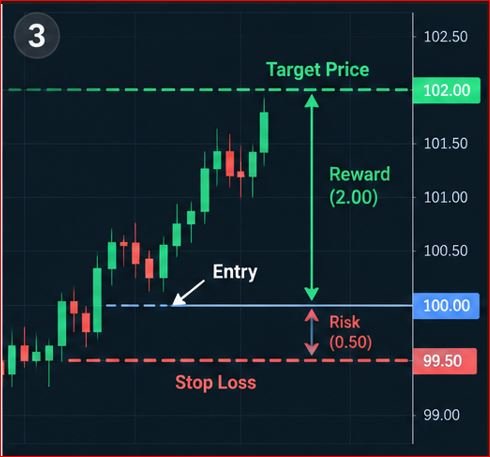
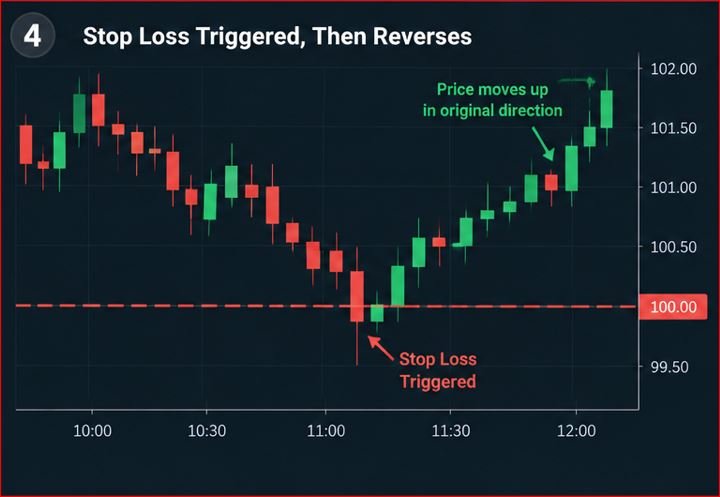
- If price frequently reverses back through your entry shortly after stopping you out, in the same direction you originally expected, that’s a sign your stop placement is too tight relative to the instrument’s actual noise level — revisit Steps 1 and 2.
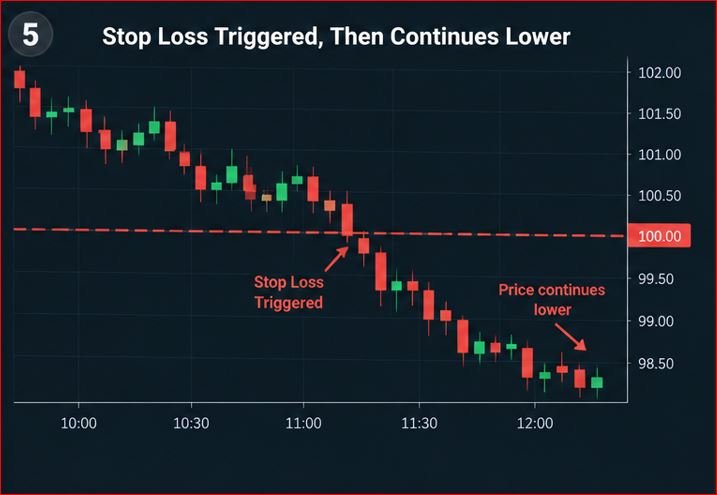
- If price continues moving against your original direction after stopping you out, your stop did its job, and the fix belongs in your entry criteria, not your stop placement.
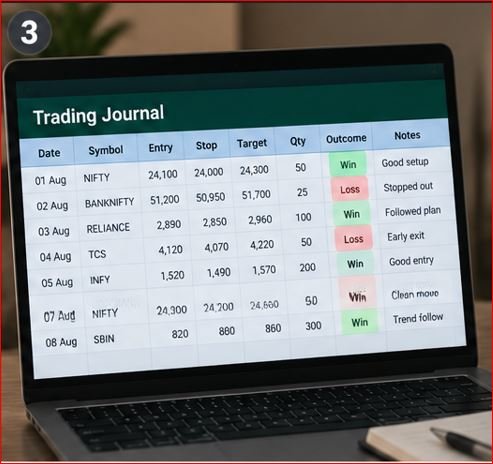
Keeping a simple trade journal — entry price, stop distance, what happened in the next 5–10 minutes after being stopped out — makes this pattern visible instead of something you’re guessing about after each trade.
Step 6: Adjust for Session Timing
Indian markets tend to show different volatility character at different points in the session. The first 15–30 minutes after the 9:15 AM open often carries wider ranges as overnight information gets priced in. The midday period can quieten down noticeably. The last 30–45 minutes before close sometimes picks up again with positional and expiry-related activity, especially near weekly index expiry.
A stop distance that works well at 9:20 AM may be unnecessarily wide by 12:30 PM, and one that works at noon may be too tight during the volatile open or close. Recalculating your ATR-based stop distance at different points in the session, rather than setting it once at 9:15 and leaving it, keeps your stop appropriately sized to the market’s current behavior.
Step 7: Avoid Widening a Stop After the Trade Is Already Open
It can be tempting, once a trade is already moving against you, to “give it a bit more room” by mentally moving your stop further away. This undoes the entire discipline of the first three steps. If your stop was calculated properly before entry, widening it after entry generally means you’re now risking more than your position size was built to handle, based on hope rather than a fresh read of structure or volatility.
If a stop genuinely feels too tight in hindsight, treat that as feedback for your next trade’s stop calculation — not a reason to move the current one.
A Realistic Example
Suppose you’re scalping Bank Nifty futures on a 5-minute chart. The 14-period ATR reads around 45 points at that moment. You spot a long setup on a break above a short consolidation range, with the recent swing low sitting 30 points below your entry.
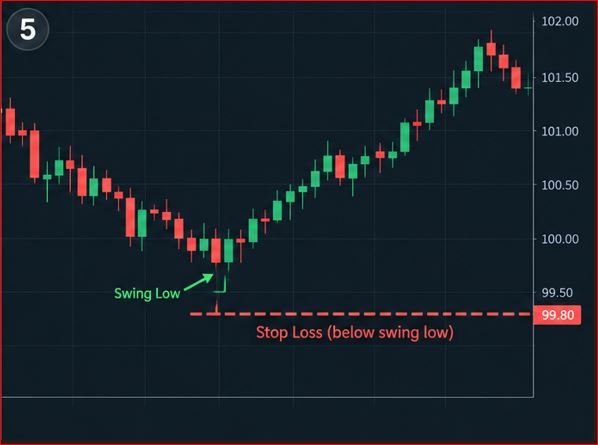
Using the framework above: the structural stop (30 points, at the swing low) is reasonably close to the ATR-based estimate (roughly 0.5x–1x of 45 points), so it isn’t sitting deep inside the noise band. You check that your realistic target — say, the next resistance zone 60 points away — gives you a risk-reward ratio of roughly 1:2, which is workable. You then size your position so that a 30-point adverse move stays within your predetermined rupee risk limit for that trade.
If Bank Nifty instead prints an ATR of 15 points during a quiet mid-session stretch, the same 30-point structural stop would look wide relative to current volatility, and it may be worth waiting for a tighter setup with a stop that better matches the calmer conditions.
A Few Things That Won’t Fix a Bad Stop Loss
- Switching brokers or platforms. Execution speed and order types matter at the margin, but a badly placed stop is badly placed regardless of which app you’re using.
- Removing the stop loss entirely. This trades small, controlled losses for the possibility of a much larger, uncontrolled one — generally a worse outcome for an active scalping strategy.
- Using someone else’s exact stop distance. A stop distance that works for one trader’s instrument, timeframe, and volatility conditions won’t automatically transfer to a different setup.
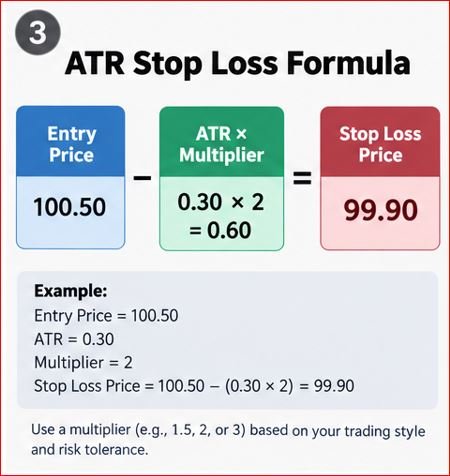
The common thread through all of this is that a scalping stop loss isn’t really one number — it’s the output of a short calculation involving current volatility, chart structure, and your account’s risk tolerance, repeated fresh for every trade.
D. FAQs
1. What is the ideal stop loss percentage for scalping? There isn’t a single ideal percentage that applies across instruments and conditions, since the right distance depends on the instrument’s current volatility (commonly measured with ATR) and the nearby chart structure. A stop that works for a calm midday session on a large-cap stock will usually be too tight during a volatile opening range on an index future.
2. Why do I keep getting stopped out right before the market moves in my favor? This usually happens when the stop is placed based on a fixed point count rather than the instrument’s actual noise level, or when it sits at an obvious, crowded level (like just below a round number or a recent low) that’s prone to a quick shake-out before the real move continues.
3. Should scalpers use a tighter stop loss than swing traders? Generally, yes, because scalping trades are held for much shorter periods and target smaller price moves, so the acceptable stop distance is proportionally smaller. However, “tighter” should still be based on short-timeframe volatility and structure, not simply as tight as possible.
4. Is ATR a reliable way to set a stop loss for scalping? ATR is a widely used volatility measure that helps size a stop appropriately relative to current market conditions, and many traders use it as one input alongside chart structure. It’s not a guarantee against any single loss, since markets can move outside typical ranges during unexpected news.
5. So what’s a fair risk-reward target for a scalper? Most traders want the reward to at least match the risk, and lean toward the reward being a bit bigger where possible — though where exactly that line sits really comes down to your own win rate and how you trade.
6. And on mental stops versus an actual stop order — a real stop order takes the decision out of your hands in the moment, which matters a lot in scalping, where price can move faster than you can react or talk yourself out of hesitating.