
Scalping looks simple from the outside. You take dozens of small, quick trades a day, book tiny profits, and let the numbers add up. In practice, it’s one of the least forgiving styles of trading there is, because the same speed that lets you take a hundred trades a day also lets you take a hundred mistakes a day.
Most scalpers who fail don’t fail because they can’t read a chart. They fail because they never built a risk framework strong enough to survive their own bad days.
A regulatory study by SEBI on individual traders in the equity futures and options segment found that roughly 93 percent of individual traders lost money over a three-year period, with cumulative losses exceeding Rs 1.8 lakh crore.
A follow-up review of FY25 data showed the picture hadn’t improved much, with more than 91 percent of traders still ending up in the red.
Scalpers, who trade far more frequently than the average F&O participant, are especially exposed to the transaction costs and slippage that quietly eat into these numbers.
None of this means scalping can’t work. It means the traders who do make it treat risk management as the actual job, and treat finding entries as a secondary skill. Below are 10 rules that matter more than any indicator or setup.
1. Decide Your Maximum Daily Loss Before the Market Opens
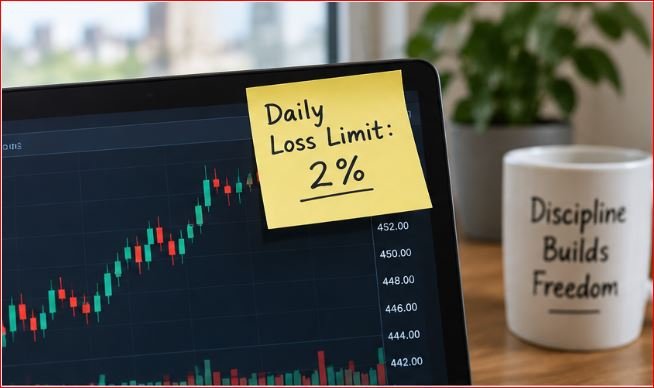
If you only take one idea from this article, take this one. Before you place a single trade, know the exact rupee amount or percentage of capital you’re willing to lose that day.
Once you’ve hit that number, you’re done for the day — even if some part of you is dead sure the very next trade is going to win it all back.
As a rough guide, this figure usually falls somewhere between 1 and 3 percent of your total capital — it really depends on how aggressive your approach is and how much of a drawdown you can actually stomach before it starts messing with your head.
Skip this step, and you’ll probably find out your real limit the hard way — on some day where three or four setups in a row just don’t work out, and frustration ends up making the calls instead of you.
Write the number down somewhere you’ll actually see it — a sticky note on your monitor works better than a mental note you can quietly renegotiate with yourself at 11 am.
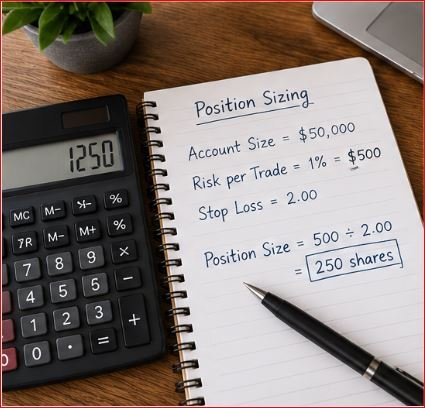
2. Size Every Trade Off Your Stop-Loss, Not Your Gut
New scalpers often decide position size first (“I’ll buy 5 lots”) and figure out the stop-loss afterward. That’s backwards.
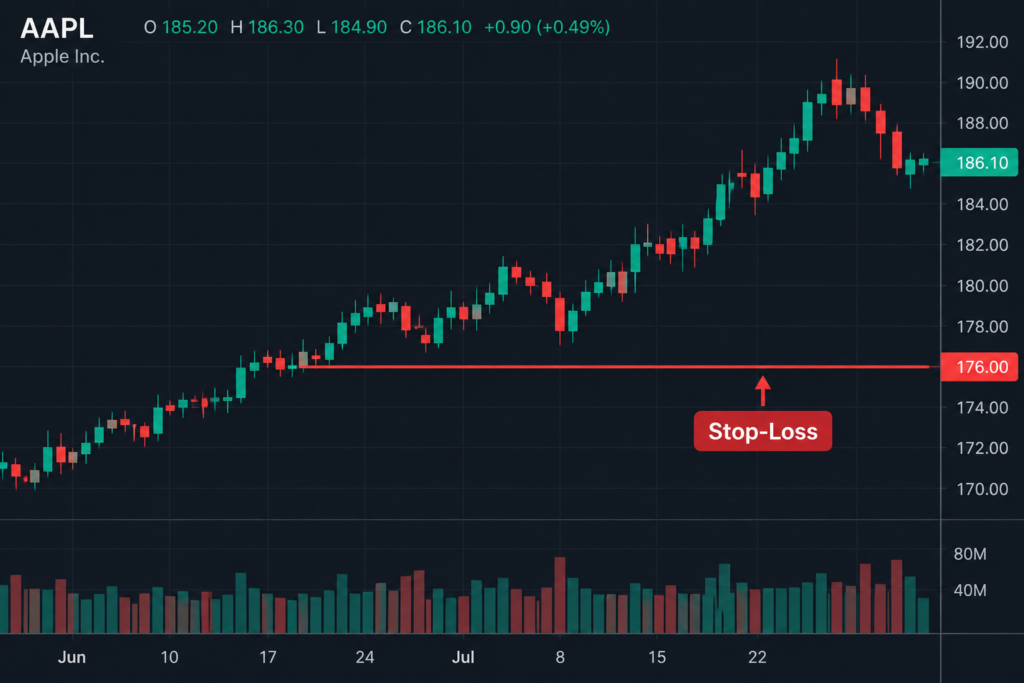
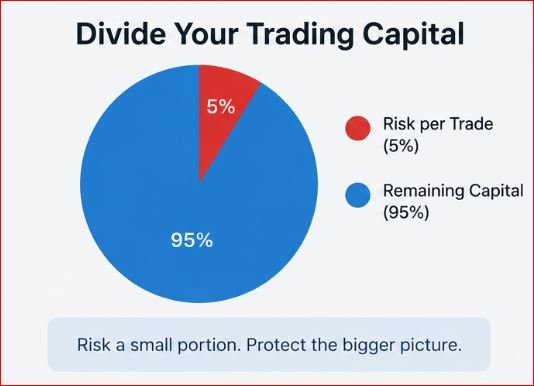
The stop-loss distance should come first — it’s set by where the trade idea is actually invalidated on the chart — and the position size should be calculated to match a fixed risk amount.
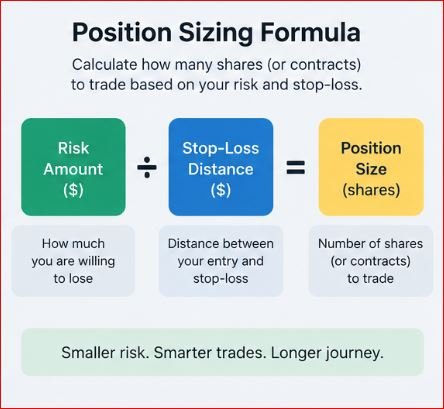
A simple version of this math: if you’re willing to risk Rs 1,000 on a trade and your stop is 5 points away on an index future where each point equals Rs 25 per lot, you can safely take roughly 8 lots (1,000 ÷ (5 × 25)).
Change the stop distance, and the position size has to change with it.
This keeps every trade the same size in terms of risk, even though the position size in shares or lots will vary.
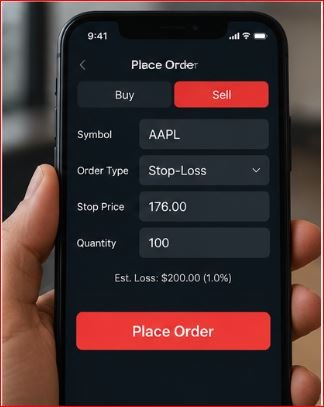
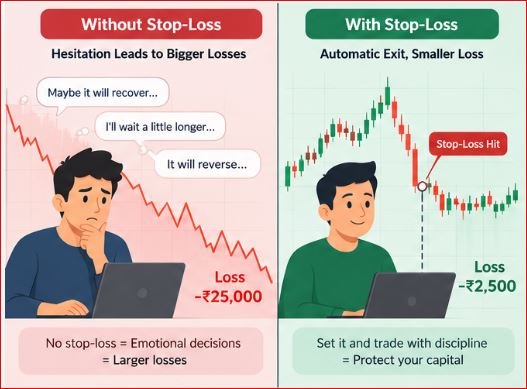
3. Use a Hard Stop-Loss on Every Single Trade, No Exceptions
Scalping is fast, and mental stop-losses (“I’ll get out if it goes against me”) tend to dissolve under pressure, especially when a trade is moving quickly and the temptation to “wait for one more candle” kicks in.
Place the actual stop-loss order the moment you enter the trade, not after.
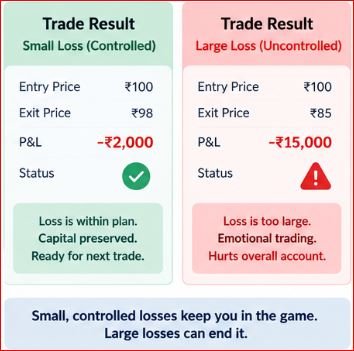
This matters more in scalping than in swing trading because the entire premise of the strategy depends on small, controlled losses.
One trade where you freeze and let a stop-loss slide can wipe out the gains from ten winning trades.
4. Fix Your Risk-Reward Ratio Before You Need to Improvise
Scalping trades typically aim for small, quick moves, so it’s tempting to take any profit that shows up rather than defining a target in advance.
But without a plan, it’s easy to end up in a pattern where losses are allowed to run slightly longer than winners are allowed to grow — a losing formula even with a high win rate.
Many scalpers work with something close to a 1:1 or 1:1.5 risk-reward ratio, since chasing bigger targets on very short timeframes often means holding through the very reversals a stop-loss would otherwise catch.
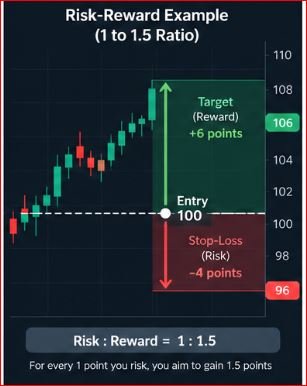
Whatever ratio you choose, decide it before entering the trade and don’t renegotiate it mid-trade based on hope.
5. Track Transaction Costs as Carefully as You Track P&L
This is the rule most scalpers underestimate, and it’s arguably the biggest reason scalping is harder in India than the raw price moves would suggest.
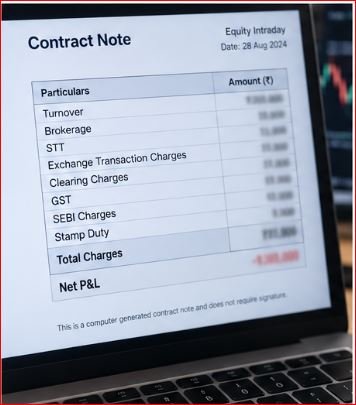
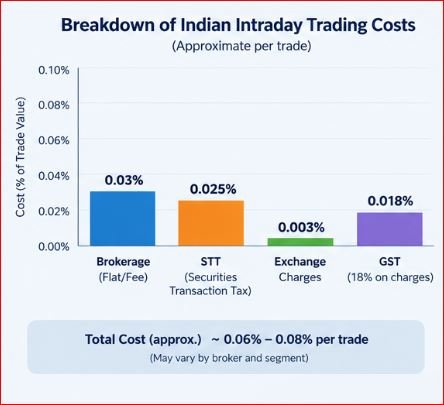
Every trade carries brokerage (even “flat fee” brokers add up fast across dozens of trades a day), Securities Transaction Tax, exchange transaction charges, GST, and stamp duty.
SEBI’s own data on F&O participants shows that transaction costs made up a meaningful share of losing traders’ overall losses, with brokerage alone accounting for roughly half of total costs and exchange fees for a further fifth.
For a scalper taking 20–40 trades a day, these costs aren’t a footnote — they can be the difference between a profitable strategy on paper and a losing one in practice.
Before you scale up trade frequency, calculate your actual cost per round-trip trade and check that your average winning trade clears that cost by a comfortable margin.

sahilkhan6809@gmail.comEdit Profile
6. Never Average Down on a Losing Scalp
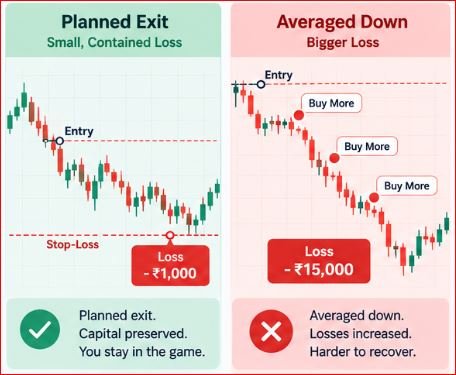
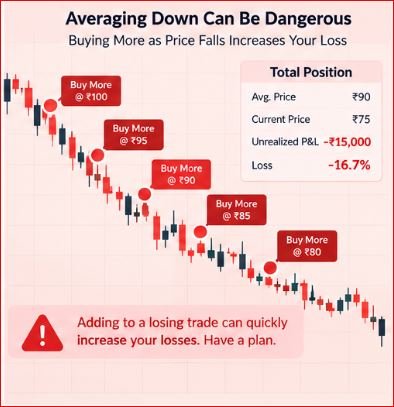
Averaging into a losing position — buying more as the price drops, to lower your average entry price — might make sense in some long-term investing contexts.
In scalping, it usually just turns a small, planned loss into a large, unplanned one, because it commits more capital to a trade that has already told you the original idea was wrong.
If a scalp goes against you, the stop-loss rule already tells you what to do: exit, reset, and look for the next setup. Adding size to a losing scalp because “it has to bounce from here” is one of the fastest ways to turn a controlled day into an account-threatening one.
7. Cap Your Trades or Put a Limit on Your Losing Streak
That speed scalping runs on cuts both ways. On a good day, it lets you compound small wins quickly.
On a bad day, it lets you take twenty variations of the same losing trade before you notice a pattern.
A practical safeguard is to cap yourself at a fixed number of consecutive losses — three or four is common — after which you stop trading for the session regardless of your daily loss limit.
This protects you from the specific trap of “revenge trading,” where each loss makes the next trade slightly more emotional and slightly less disciplined than the one before it.
8. Match Your Risk Rules to the Instrument’s Volatility
A rupee amount of risk that’s sensible on a large-cap stock can be far too tight — or far too loose — on a volatile index option or a small-cap future.
Before applying a fixed stop-loss distance across different instruments, adjust for how much that instrument typically moves in a given timeframe.
This is particularly relevant in the Indian market, where weekly index options can move a large percentage of their premium in minutes around news events or expiry days.
A stop-loss distance that worked fine on a calm Tuesday afternoon may be far too tight during a high-volatility expiry session, leading to stop-outs that aren’t really about the trade being wrong — they’re about the stop being set without volatility in mind.
9. Keep Leverage Consciously Low, Even When It’s Available
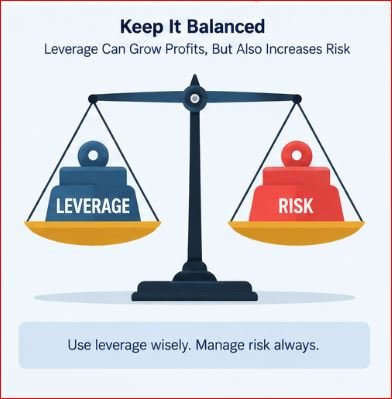
Indian brokers routinely offer intraday leverage well beyond what’s needed for most scalping setups. Pushing max leverage on every trade will make your good days look better, sure — but it does the exact same thing to your bad days. And with scalping, you’re taking so many trades that a losing streak is a lot more likely to show up than most people think.
A better way to handle it is to set your leverage limit ahead of time, as a fixed rule — not something you adjust based on how sure you feel about a particular trade. And cut it down even more around expiry days, big data releases, or anytime volatility tends to spike and prices swing harder than normal.
10. Review Your Trades Weekly, Not Just Your P&L
Daily P&L tells you whether you made or lost money. It doesn’t tell you whether your risk management actually worked. Set aside time once a week to go through your trade log and check things like: How often did you hit your stop-loss versus exit early out of fear?
How often did your position size actually match your intended risk? Did any single trade account for a disproportionate share of your losses?
This kind of review is where most of the actual improvement in scalping happens — not in finding a better indicator, but in noticing the specific ways your own execution drifts from your plan under pressure, and correcting it before it becomes an expensive habit.
Why Risk Management Matters More in Scalping Than in Other Styles
Scalping compresses decision-making into seconds and multiplies the number of decisions you make in a day. A swing trader might make five trading decisions in a week; a scalper can make that many in twenty minutes.
Every weakness in your risk process — a stop-loss you’re tempted to move, a position size you’re tempted to increase after a win — gets multiplied by that frequency.
This is also why cost awareness matters so much in the Indian context specifically. Brokerage, STT, and exchange charges apply per trade, not per rupee of profit, so a strategy that looks fine on a spreadsheet with 5 trades a day can look very different at 30 trades a day once real costs are subtracted.
Building risk rules that account for this from day one is what separates a repeatable scalping process from an expensive form of guessing.
A Simple Way to Put These Rules Into Practice
You don’t have to master all ten rules on day one. A good place to actually start is this: lock in your max daily loss, settle on a risk-reward ratio, and use a real stop-loss on every single trade. Once you’ve kept those three consistent for a few weeks, start layering in cost tracking and a limit on losing streaks.
The rest — volatility adjustment, leverage discipline, weekly review — tend to develop naturally once the basics are automatic.
The goal isn’t to eliminate losses. Losses are a normal part of scalping, even for traders who are net profitable.
The goal is to make sure no single day, and no single emotional decision, can undo weeks of otherwise disciplined trading.
D. FAQs
1. How much of my capital should I risk per scalping trade? Most scalpers keep individual trade risk small — often 0.25 percent to 1 percent of total trading capital per trade — so that a string of losses doesn’t meaningfully damage the account. The exact number depends on your strategy’s win rate and how many trades you take per day.
2. Is scalping riskier than swing trading or long-term investing? Scalping isn’t necessarily riskier per trade, but it multiplies the number of decisions and transaction costs you’re exposed to in a day, which raises the importance of strict risk management compared to lower-frequency strategies.
3. Should I use a fixed stop-loss or a trailing stop-loss for scalping? Many scalpers use a fixed stop-loss for the initial risk on a trade, since scalping timeframes are short and trailing stops can sometimes exit a trade prematurely on normal short-term noise. Some traders do use tight trailing stops once a trade has moved meaningfully in their favour, purely to protect profit rather than to manage initial risk.
4. Why do transaction costs matter so much for scalpers specifically? Because scalpers take far more trades than most other traders, brokerage, STT, exchange charges, and GST apply repeatedly across the day. A strategy that looks profitable before costs can turn unprofitable once realistic transaction costs are factored in.
5. What’s a reasonable daily loss limit for a beginner scalper? A conservative starting point is 1 percent of trading capital as a daily stop, with a clear rule to stop trading for the day once that limit is hit, regardless of how the next setup looks.
6. Can I scalp with high leverage if my stop-losses are tight? Tight stop-losses reduce risk per trade but don’t eliminate the risk of a losing streak, slippage during fast markets, or a stop-loss failing to execute at the exact price during a sharp move. Keeping leverage moderate, rather than maximum, gives you more room to recover from a rough session.
7. How often should I review my scalping performance? A weekly review is usually enough to spot patterns — such as consistently moving stop-losses or oversized positions — without over-analysing normal day-to-day variance in results.