Best Day Trading Platforms in India: How to Actually Choose One
Ask ten different traders which app is best for day trading in India, and you’ll get ten different answers — most people will defend their pick pretty stubbornly. That’s not because nine of them are wrong. It’s because “best” depends on things that vary from one trader to the next — how many trades you place a day, whether you trade cash, futures, or options, and how much you rely on charting or automation.

Rather than ranking apps by popularity, it helps to start with what actually matters for day trading specifically, since that’s a different job than long-term investing. A platform that’s great for someone who buys and holds stocks for years can be a poor fit for someone placing fifteen intraday trades before lunch.
Day trading is regulated, and that shapes what platforms can offer
Every stockbroker in India has to register with SEBI and hold membership with whichever exchanges it lets you trade on — usually the NSE and BSE. That matters more if you’re day trading than if you’re just investing, since intraday trades run on margin: you’re borrowing part of the trade value from your broker, and SEBI has recently tightened how much of that margin you need ready upfront.”

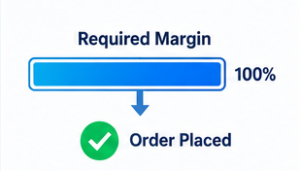
Under SEBI’s peak margin framework, brokers are required to collect the full exchange-mandated margin from a trader before a position is even opened, rather than checking margin adequacy only at the end of the day. If a trader’s account falls short of the required margin at any point, the broker can levy a penalty, typically ranging from about 0.5% to 5% of the shortfall depending on how large and how frequent it is. In practice, this means the aggressive leverage some platforms advertised years ago isn’t available in the same way anymore — margin limits are fairly similar across brokers because they’re following the same regulatory floor, not because one platform is more generous than another.

That’s exactly why you should raise an eyebrow at any platform or influencer promising sky-high intraday leverage. If an offer sounds like it’s finding a workaround for SEBI’s margin rules, don’t just take it at face value — check with the broker directly, or on SEBI’s own website, before you act on it.”
What to actually compare before choosing a platform
Brokerage and hidden costs
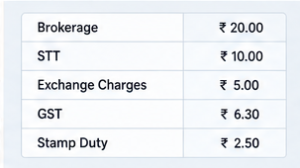
Most discount brokers in India offer free, or nearly free, equity delivery trades these days — but intraday and F&O orders still get charged per trade, usually a flat fee around ₹20 or a small percentage, whichever’s cheaper. Here’s the catch: brokerage is never the whole story. STT, exchange transaction charges, SEBI turnover fees, stamp duty, and GST all stack on top, and if you’re trading often, that adds up faster than the headline number suggests. It’s worth punching a few sample trades into a broker’s own calculator instead of trusting a comparison table, since these fee structures shift more than people expect.”
Order execution speed and platform stability
For a long-term investor, a few seconds of lag barely matters. For someone scalping intraday moves, it can be the difference between a profitable exit and a missed one. Platform stability during high-volatility windows — the market open, results announcements, or major index moves — is one of the most common complaints traders raise about brokers, and it’s genuinely hard to evaluate from marketing pages. Reading recent user discussions on trading forums close to the date you’re researching tends to be more useful than an app’s own claims about “zero downtime.”

Margin and leverage within SEBI’s rules
As covered above, intraday margin is now fairly standardized across brokers because of the peak margin framework. Where platforms still differentiate themselves is in how clearly they show your margin usage in real time, and how they handle margin calls — some auto-square-off positions more aggressively than others when margin falls short, which can matter a lot during a fast-moving session.

Charting tools and market data
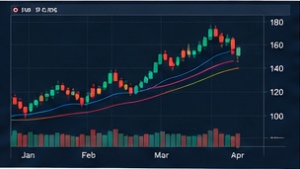
Day trading leans heavily on technical analysis, so the depth of charting tools matters more here than for buy-and-hold investing. Some platforms build their own charting from scratch, while others integrate with third-party charting services like TradingView, which many traders already use and prefer. Look for how many indicators are supported, whether multiple timeframes and chart types are available, and whether the mobile app offers the same charting depth as the desktop version — a lot of day trading now happens on phones.

Customer support and fund withdrawal
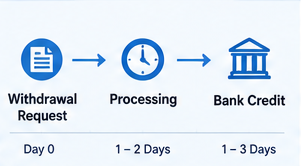
This one is easy to overlook until something goes wrong. If an order fails to execute, or a withdrawal is delayed during a week when you need the funds, how quickly a broker’s support team responds matters a great deal. Checking a broker’s grievance redressal record — SEBI requires brokers to publish this data — is a more reliable signal than star ratings on an app store.

API access for algorithmic or semi-automated trading
A growing number of day traders in India use broker APIs to automate parts of their strategy, from simple alerts to fully automated order placement. Not every broker offers this, and among those that do, documentation quality and API stability vary widely. This is also an area facing a significant regulatory change, covered in more detail below.

How commonly used platforms compare
The table below reflects publicly listed pricing as of the platforms’ own websites at the time of writing. Brokerage structures change periodically, so it’s worth confirming current rates directly on the broker’s pricing page before opening an account.
| Platform | Equity delivery | Equity intraday | F&O (per order) | Notable for |
|---|---|---|---|---|
| Zerodha | Free | ₹20 or 0.03%, whichever is lower | ₹20 flat (options); ₹20 or 0.03% (futures) | Best known for Kite, its charting platform — it’s got one of the biggest user bases of any broker here, and traders who want to automate things use its Kite Connect API a lot.” |
| Upstox | ₹20 per order | ₹20 or 0.1%, whichever is lower | ₹20 flat (options); ₹20 or 0.05% (futures) | Backed by some fairly heavyweight investors, and it’s clearly built with the mobile app as the priority rather than an afterthought.” |
| Angel One | Promotional free trades initially, then ₹20 or 0.1% | Same tiered structure | ₹20 flat after promotional period | Research and advisory tools alongside execution |
| Dhan | Free | ₹20 or 0.03%, whichever is lower | ₹20 flat | Free TradingView charting integration, options-focused tools, free API access |
| Fyers | ₹20 (Standard) or ₹15 (Prime) | Same tiers, 0.03% alternative | ₹20 flat (Standard) or ₹15 (Prime) | Subscription-style “Prime” plan for high-frequency traders, API and automation focus |

None of this is a recommendation to use one platform over another — the right choice depends on your trading frequency, whether you value built-in research, and whether API access matters to you. Someone placing two or three trades a week will barely notice per-order fee differences; someone placing thirty a day will feel them within a month.
SEBI’s 2026 algo trading rules change things for API users
If you use or plan to use a broker’s API to automate any part of your trading, there’s a regulatory change worth knowing about. SEBI’s updated algo trading framework takes effect from April 1, 2026, after being pushed back from an earlier 2025 date to give brokers time to comply.
Under the new framework, retail traders whose order activity stays below a defined threshold — around 10 orders per second measured per exchange — generally don’t need to formally register a trading strategy. Traders operating above that threshold, or using more complex automated strategies, will need their strategy registered through their broker, and only static IP addresses registered with the broker will be permitted to place orders through the API. Session authentication requirements are also being tightened, with OAuth-based logins and mandatory two-factor authentication for API sessions.

The bigger change, honestly, is around who’s accountable: brokers are now treated as the principal for any algo trading happening on their platform, which means a third-party algo provider is legally acting as the broker’s agent — not some independent party off doing its own thing. So if you’re using a third-party algo or automation tool that sits on top of a broker’s API, it’s worth checking that the provider has actually completed the required exchange empanelment before the deadline hits. Use an unregistered provider after April 2026, and you could end up with no real recourse if something goes wrong.”
Mistakes that cost beginners more than brokerage fees ever will
Picking the “best” platform matters less than most beginners assume, and picking the wrong approach to day trading itself matters a lot more. A few patterns show up repeatedly among people who lose money quickly:
- Trading with money they can’t afford to lose, then making worse decisions under that pressure.
- Increasing position size to “win back” a loss in the same session, rather than stepping away.
- Ignoring the total cost of trading — brokerage, STT, and other charges — when calculating whether a strategy is actually profitable.
- Relying on tips from social media or unregistered “advisors” instead of doing their own analysis or working with a SEBI-registered investment adviser.

Day trading carries real risk of capital loss, and a fast, cheap platform doesn’t change that. It’s worth treating platform choice as one input among several, not the deciding factor in whether trading goes well.

A practical way to decide
If you’re choosing between platforms, it helps to work through this in order rather than starting with brand reputation:
- Estimate how many intraday and F&O trades you’re realistically likely to place in a month, and run that volume through each shortlisted broker’s brokerage calculator.
- Check whether the platform’s charting tools cover what your strategy actually needs — indicators, timeframes, and chart types — not just what looks impressive in a demo.

2. If you’re planning to use APIs or any kind of automation, check the broker’s API documentation and uptime record, and — starting April 2026 — make sure they’re actually compliant with SEBI’s registration requirements. Before funding an account.
3. look up the broker’s SEBI registration number and their recent grievance redressal numbers too and honestly.
4. Start small — put in a modest amount, run it through a demo account or a stretch of low-volume trading, and see for yourself how fast execution is and how responsive support actually is, rather than just taking other people’s word for it.”
FAQ
Is day trading legal in India?
Yes — as long as you’re trading through a SEBI-registered stockbroker, you’re fine. What you want to steer clear of is trading through unregistered platforms or acting on tips from unregistered “advisors” promising guaranteed returns — that’s not just a bad idea, it can cross into illegal territory.”

Which platform has the lowest brokerage for day trading?
Honestly, most discount brokers land in a similar range — a flat fee or a small percentage per order, whichever’s lower. The exact numbers shift over time and often depend on limited-time offers, so your best bet is checking each broker’s current pricing page yourself and running your expected trade volume through their calculator, rather than trusting a ranking that might already be out of date.”

Do I need a separate account for day trading versus long-term investing?
Nope — in India, you place both from the same trading and demat account. You just pick the order type when you place the trade: intraday (MIS) or delivery (CNC).”

How much money do I actually need to start day trading?
>>>>>>>>>>>>>>>>>>There’s no fixed minimum set by SEBI, but you’ll need enough to cover the margin for whatever you’re trading, with a bit of a cushion on top so a small move against you doesn’t trip a margin shortfall penalty.” Most experienced traders will tell you to start with an amount you’re okay losing entirely — because while you’re still learning, there’s a decent chance you will.”
What is SEBI’s peak margin rule, in simple terms?
>>>>>>>>>>>>>>>>>>It requires brokers to collect the full exchange-mandated margin from you upfront before a trade is executed, rather than allowing you to trade first and settle margin later in the day. It reduces the leverage retail traders can access compared to older margin arrangements.
Are trading apps actually safe to use?
>>>>>>>>>>>>>>>>>>If the app comes from a SEBI-registered broker that’s a member of the NSE or BSE, yes — it’s regulated and has to meet reporting requirements, which gives you real protection. That said, no app can protect you from market risk itself, so it’s still worth turning on two-factor authentication and actually reading your account statements instead of ignoring them.”

Will SEBI’s new algo trading rules affect casual traders who aren’t using APIs at all?
Not directly. If you place orders manually through a broker’s app or web platform, these specific rules don’t change how you trade.