
Crypto Algo Trading in India: A Practical Guide for Beginners
If you follow crypto conversations in India, you’ve probably heard people mention algo trading. It’s often presented with profit screenshots, impressive returns, and the idea that an automated system can keep making money with very little effort. That can give the wrong impression. Algo trading is widely used in crypto, but using a bot doesn’t mean you’ll automatically make money. Whether it works well depends on the strategy you choose, what the market is doing, the fees involved, and how carefully you manage your risk.

This guide explains what algo trading actually involves when you’re dealing with cryptocurrency. We’ll also look at some of the strategies traders commonly use, how crypto trading works in the first place, and the practical things Indian traders should consider before getting started, including trading apps, taxes, and managing risk.
What Algorithmic Trading Actually Means
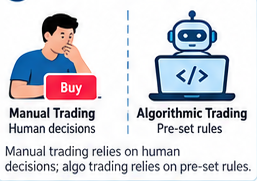
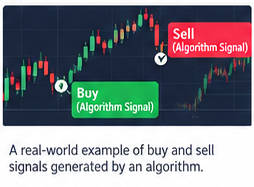
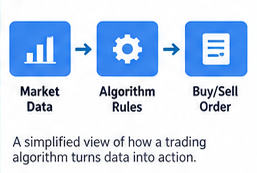
With algo trading, you decide the trading rules first and let software do the rest. You could set it to buy a coin when the price falls to a certain point, for example, and sell when it reaches your chosen target. The program keeps watching the market and acts when those conditions are met, so you don’t have to constantly check prices and place every trade yourself.
In traditional stock markets, algo trading is mostly the domain of institutions with expensive infrastructure. Crypto is different. Some platforms hold the crypto on your behalf, which is known as a custodial arrangement. Others allow you to keep control of the assets through your own wallet. That distinction matters because it determines who is responsible for protecting the funds. Crypto prices can also be extremely volatile, with noticeable price changes happening within a single day, so risk management is something both manual traders and bot users need to take seriously.

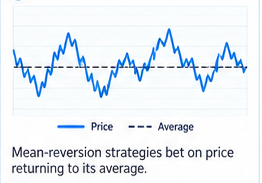
It’s worth being clear about what algo trading is not. It is not a way to eliminate risk. Mean reversion is based on a fairly simple idea: when a price moves unusually far from where it has been trading recently, it may eventually move back toward that level. A bot using this approach might buy after a steep price drop in the hope that the market will recover.
If the price recovers, the bot can then sell based on the rules already set. This type of strategy tends to work better when prices are moving up and down within a fairly steady range. It becomes much riskier when the market is consistently moving in one direction.
How Crypto Trading Actually Works?
It helps to know how regular crypto trading works before getting into bots and automated strategies. Crypto trading is fairly simple at its core. You buy or sell currencies such as Bitcoin and Ethereum through a crypto exchange. The exchange provides the marketplace for these trades, matching people who want to buy crypto with those looking to sell it.
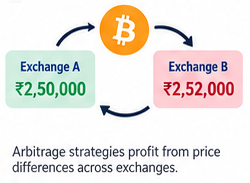
- No single central exchange. Prices can differ slightly across platforms, which is part of why arbitrage strategies exist.
- 24/7 markets. There’s no opening or closing bell, so price movement — and the need for monitoring — never really stops.
- Wallets and custody. Where your crypto is kept depends on the platform you use. Some exchanges hold it for you, while others let you keep it in your own wallet. The main difference is who takes responsibility for keeping those assets secure.
- High volatility. Crypto prices can change a lot in a short period of time. A coin may rise or fall by several percent in a single day, so traders need to think carefully about how much risk they are taking, whether they trade manually.

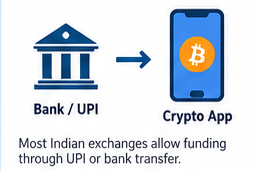
In most cases, you start by adding rupees to your exchange account through UPI or a bank transfer. You can then use that money to buy the cryptocurrency you want. After buying it, you can hold onto it, sell it later, or exchange it for another cryptocurrency. Every one of those actions — including swapping one coin for another — is treated as a taxable event under Indian tax rules, which we’ll get to shortly.
Common Algo Trading Strategies Used in Crypto
Many of the strategies used by crypto trading bots aren’t actually new. Traders have used similar approaches in stock and other financial markets for years. Crypto traders have simply adapted them to a market that operates around the clock. Here are some of the most common strategies you’ll come across.
Trend Following
Trend-following bots try to identify when an asset is moving consistently in one direction and ride that movement, usually using indicators like moving averages. The logic is simple — buy when the trend turns up, sell or short when it turns down — but the challenge is that crypto trends can reverse sharply, and a bot that’s slow to recognise the reversal can give back gains quickly.

Mean Reversion
Mean reversion follows a simple idea: a big move in price may eventually reverse. So, if a cryptocurrency drops well below the level where it has been trading recently, the bot may buy it and wait for the price to move back up. It generally works better when the market is moving within a range. If the price keeps falling or continues strongly in one direction, however, the strategy can lead to losses.
Arbitrage
Crypto prices aren’t always exactly the same on every exchange. Arbitrage bots try to make money from small price differences across crypto exchanges. A coin might be selling for slightly less on one platform than another, so the bot buys on the cheaper exchange and sells on the more expensive one. These opportunities usually don’t last long, though. Prices can adjust within seconds, and once trading fees are taken into account, the potential profit may be very small. That’s why arbitrage tends to depend heavily on speed, low fees, and sufficient trading volume.

Market Making
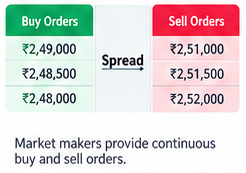
Market-making bots try to earn from the small gap between buying and selling prices. They continuously place orders on both sides of the market and make a small profit when those orders are filled as expected. The individual gains may be small, and there is still plenty of risk. A sudden move in price can leave the bot holding a position that quickly loses value.
Grid Trading
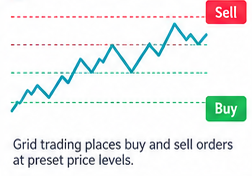
A grid bot sets up several buy and sell orders at different price levels. As prices move up and down, the bot buys at the lower price levels and sells when they move higher. The idea is easy to understand and relatively simple to set up, which is why grid trading is often popular with beginners. The problem comes when the market keeps moving in the same direction.

Automating Regular Purchases with DCA
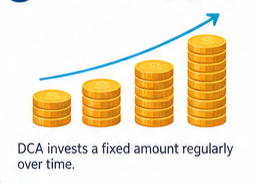
A DCA bot doesn’t try to predict the perfect moment to enter the market. Instead, it invests a fixed amount at regular intervals, whether the cryptocurrency happens to be up or down at the time. The idea is to spread purchases across different prices rather than putting all the money into the market at once. This approach is generally more relevant to people with a longer-term outlook than traders trying to profit from every short-term price movement.
There isn’t one trading strategy that works best in every situation. A strategy that performs well in one type of market may struggle when conditions change. For this reason, some traders use a mix of strategies or change their approach depending on what the market is doing rather than relying on the same method all the time.

How to Start Crypto Trading in India
If you’re completely new to crypto trading, getting started is fairly straightforward. Here’s what the process usually looks like.
- Choose a registered exchange. Before signing up with a crypto exchange, check that it is registered with FIU-IND and follows India’s KYC and anti-money-laundering requirements. This gives you some assurance that the platform is operating within the country’s regulatory framework.
- Complete KYC verification. This usually involves your PAN card, a government ID, and a selfie or video verification, similar to opening a bank or demat account.
- Fund your account. Once your account is ready, you can add rupees to it using one of the payment methods offered by the exchange, such as UPI, IMPS, or a bank transfer.
- Start small and learn the interface. Before using any strategy — manual or algorithmic — spend time understanding order types, fees, and how withdrawals work on that specific platform.
- Decide between manual and algorithmic trading. Some exchanges have simple tools, such as DCA or grid bots, built into their platforms. If you want more control or a more advanced strategy, you may need to connect a trading bot or your own program to the exchange through its API.
- Decide how much you’re prepared to lose before you start trading, rather than making that decision after the market moves against you. If you plan to use a bot, look at how the strategy performed on historical market data first. Past results won’t guarantee future profits, but they can give you a better idea of how the strategy behaves in different market conditions.

How to Choose a Crypto Trading App
The Indian crypto app landscape has matured considerably, and most established platforms now offer similar core features: INR deposits, a reasonable range of coins, and at least basic charting. When comparing apps, it’s worth looking at:
- Whether the exchange is FIU-registered and how transparent it is about compliance
- Trading and withdrawal fees, since these eat into returns over many small trades
- Whether it automatically handles the 1% TDS deduction, which saves you manual tracking
- API access, if you plan to run your own algorithmic strategies
- Customer support quality, especially for KYC or withdrawal issues
Sharesies may also come up when you’re looking at different investment apps. It’s a well-known platform in New Zealand and Australia, where it has mainly been used for investing in shares, ETFs, and managed funds.
While the platform has been moving into crypto, it isn’t designed specifically for people trading crypto in India. Indian users are generally better served by platforms that support rupee deposits and are set up around local KYC and tax requirements.
Taxes and Compliance You Can’t Ignore
Taxes are something new crypto traders can easily overlook. This becomes even more important when you use a trading bot, since it may place dozens or even hundreds of trades that you’ll need to keep track of.
Crypto profits in India are taxed differently from most regular investments. Under the current rules, income from transferring a Virtual Digital Asset (VDA), including cryptocurrency, is generally taxed at 30%, with a 4% health and education cess added on top. This applies regardless of your normal income-tax slab or how long you held the crypto. There is also a 1% TDS on qualifying transactions above the applicable threshold. Another important point is that a loss from one crypto asset generally cannot be used to reduce the taxable profit made from another crypto asset or other sources of income.Every crypto-to-crypto swap is also treated as a taxable sale of the first asset, not a tax-free exchange.
For an algo trader running dozens or hundreds of automated trades a month, this means:
- Every executed trade — including small bot rebalances — is potentially a taxable event
- Losses on bad trades don’t reduce your tax bill on winning ones
- Keeping detailed transaction records isn’t optional; it’s necessary for accurate filing
Given how strict and unforgiving these rules are compared to equity trading, it’s genuinely worth consulting a qualified chartered accountant familiar with VDA taxation before running an active algorithmic strategy, rather than figuring it out after the fact.
Risks Specific to Algorithmic Crypto Trading
Beyond the general volatility of crypto, algorithmic trading introduces its own set of risks worth taking seriously:
- Overfitting. A strategy that looks great on historical data (backtested) can fail in live markets if it was too finely tuned to past price patterns that won’t repeat.
- An exchange may go offline, an API connection can stop working, or the bot itself may have a bug. Any of these problems could cause a trade to be missed, delayed, or placed when it shouldn’t be.
- Rented “signal” bots. Paid bot services and signal groups promising fixed returns are a common source of scams in the Indian crypto space. Genuine strategies can’t guarantee fixed profits, because markets aren’t predictable enough to promise that.
- Security of API keys. A trading bot usually needs API keys to connect to your exchange account. Those keys need to be kept secure, because if someone gets access to them, your account and funds could be at risk.
Getting Started Responsibly
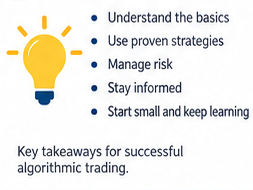
If this is your first exposure to algorithmic crypto trading, a sensible path looks less like diving in with a complex custom bot and more like this: learn how manual crypto trading works first, understand a strategy’s logic before automating it, test with small amounts, keep meticulous records for tax purposes, and treat any bot or strategy claiming guaranteed returns as a red flag rather than an opportunity.
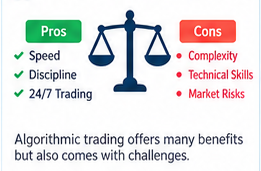
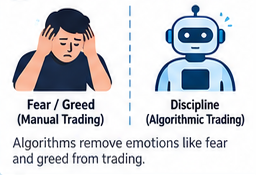
Algo trading strategies can genuinely help remove emotional decision-making from crypto trading, and they’re used seriously by both individuals and institutions. But the strategy is only ever as good as the assumptions behind it — and no amount of automation changes the fact that crypto markets remain volatile, and Indian tax rules on VDAs are strict and currently offer no relief for losses.
FAQ
1. Is algorithmic crypto trading legal in India? Yes, using a trading bot or automated strategy through a compliant exchange is legal, provided the exchange itself is registered with the FIU-IND and you follow standard KYC and tax reporting requirements.

2. Do I need coding skills to do algo trading in crypto? Not necessarily. You don’t necessarily need to know how to code to start using trading bots. Many exchanges and trading platforms already provide ready-made options, including grid and DCA bots. You’ll generally need some coding knowledge if you want to create your own trading strategy or control exactly how and when the bot places trades.
3. How Much Money Do You Need to Start Crypto Trading in India?
You can start trading crypto without putting in a lot of money. Some Indian crypto exchanges let you begin with just a few hundred rupees. How much you choose to invest, however, should depend on your budget and how much you can comfortably afford to risk.
4. Can I Use Crypto Losses to Reduce My Taxes in India?
>>>>>>No. Under India’s current tax rules, losses from crypto and other Virtual Digital Assets (VDAs) generally cannot be used to reduce your taxable income from other sources. You also cannot use a loss on one VDA transfer to offset gains from another VDA transfer.
5. Is Sharesies a good option for crypto trading in India? Sharesies is primarily built for New Zealand and Australian investors and has traditionally focused on stocks and funds rather than crypto for Indian users. If you’re trading from India, it usually makes more sense to choose a platform that supports rupee deposits and is designed to work with Indian KYC and tax requirements.

6. How Is a Trading Bot Different From a Trading Signal Service?
A trading bot follows a set of predefined rules and automatically places trades when those conditions are met. A signal service simply tells you when to buy or sell, leaving execution to you. Signal services promising guaranteed profits are a common red flag in the crypto space.
7. Can algo trading guarantee profits in crypto? No legitimate strategy can guarantee profits. Algo trading can help you stick to a strategy without letting emotions influence every decision. But using a bot doesn’t make trading risk-free. You can still lose money, and promises of guaranteed or consistently high returns should always be viewed with caution.