Share Market Demat Account: Complete 2026 Guide
My first account with a demat in a bank branch. I was sitting next to an account manager who kept offering me on an mutual fund SIP I had not asked for. The process took about forty minutes, and three signatures I couldn’t grasp. This was many years back. Now, you can open a file on your smartphone in less than fifteen minutes. But the confusion over costs, document types, and the right app isn’t gone completely. The site has been updated.
If you’re struggling to determine what a demat account really is, how much is it worth, and which application won’t slap you with fees that aren’t there, this article goes through it in the same way I’d like someone else to have walked me through it first time.
What Is a Share Market Demat Account?
Demat accounts, abbreviated as “dematerialized” account — is the place where your bonds, shares ETFs, bonds, and mutual fund units reside electronically rather than physical certificates. Consider it an investment storage unit. It isn’t possible to purchase or sell shares in either the NSE and BSE without a locker; it’s an obligation of law, and it’s not an option to be nice.
It is used in conjunction with an account for trading. It is the account where you can place purchase or sell orders. It is the demat account the place where shares are stored after the trade is completed. The majority of brokers combine both accounts in one sign-up which means you will not have to open each one separately.

What is Demat account – Understand in simple language
To put it simply, a demat account is a digital locker where your shares are stored in electronic form. Previously, physical share certificates were used, which carried the risk of loss or errors. Now, under SEBI regulations, every investor is required to hold their shares in dematerialized form. Therefore, opening a demat account is essential before trading shares in the market, whether on the NSE or the BSE.

How to Open a Demat Account: Step-by-Step
The process of opening one can be much more rapid than many people think. Here’s the procedure that most SEBI registered brokers adhere to:
- Pick an Depository Participant (DP) — an account with a broker that is registered or NSDL or CDSL. It is the person who has your shares in the record.
- Complete the online form using details of your personal identification number (PAN), Aadhaar, and bank account information.
- Complete E-KYC by using Aadhaar OTP verification — No physical document courier required any more.
- Upload your signature and upload a photo generally recorded live using the camera of the application.
- Full In-Person Verification (IPV) via a quick video chat, an SEBI-mandated procedure to verify that you’re an actual person who has a valid consenting application.
- Sign the form for opening an account by using an Aadhaar-based electronic signature.
- You will receive your account number for demat (DP ID and Customer ID), usually within 24 to 48 hours.

I’ve tried this with three different programs as well, and I believe I’ve found that the IPV video section is where folks get stuck the with the most issues: poor illumination, background noise or a picture on a PAN card which is too blurry to confirm. Make sure you’re near a window that has natural light, and you’ll be able to avoid rejection.

Documents Required for Demat Account Opening
- PAN card (mandatory — no exceptions)
- Aadhaar card, which is tied to your mobile number registered
- Checks that have been cancelled or bank statements to verify bank accounts
- Photograph of passport size
- Signature sample (scanned or digitally recorded)
- Proof of income is only necessary if you are planning to invest on derivatives (F&O)
Share Market Demat Account Charges: What You Actually Pay
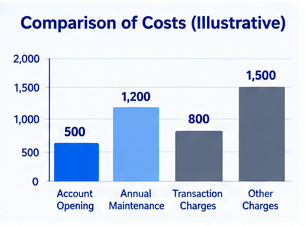
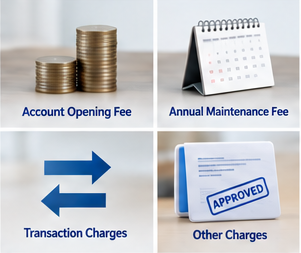
The majority of review articles are unclear, so let’s get particular. The majority of charges fall into four different categories:
| Charge Type | Typical Range | When It’s Charged |
|---|---|---|
| Account opening fee | Rs0-Rs500 | Once in a while, many brokers do not do not require this |
| Annual Maintenance Charge (AMC) | Rs0-Rs900/year | The cost is yearly and sometimes it’s not charged for the initial year. |
| Charges for transactions | Rs0-Rs25 per debit | The charges are incurred when shares depart from your account at demat (i.e. the moment you make a sale) |
| Dematerialization/Rematerialization fee | Rs150-Rs200 per certificate | Only when converting shares in physical form into electronic format |
These are estimates basing them on industry averages and are subject to change across brokers. Make sure to verify the current fees directly through your broker’s fees page prior to opening a new account because this information is not a live price tracker.
There’s a fact that nobody will tell the truth that the term “free” demat account almost does not mean free for ever. I’ve fallen for it myself when I signing up for an AMC-free account the first year, but was hit with a $300 annual bill in the year following since I didn’t understand the banner on their homepage. Take a look at the PDF fee schedule and not only the website for marketing. The fee schedule is usually hidden three clicks in depth because of an explanation.
Best Demat Account Apps: What to Actually Compare
The majority of “best demat app” lists focus on fees for brokerage which I believe is an unwise choice for someone who is just beginning. The speed and the reliability of the app during volatile trading hours are more important than saving you Rs10 on brokerage A crashed application when the market is swinging is more expensive than any fee increase could ever do.
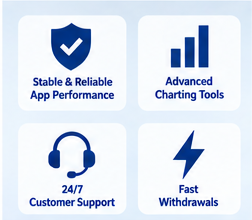
In comparing apps, consider the following:
- Stability of apps in peak hours of the market (9:15-9:30 AM ) is the time the time when many apps fail)
- Tools for charting are useful when you are planning to conduct any kind of analysis on technical aspects
- Response time of customer support Check the latest reviews on the app store rather than just the rating of stars.
- The speed of withdrawing funds Some brokerages settle within a couple of hours. Others take up to 1-2 working days
- AMC and the transaction charges Transparency

Demat Account Login: Common Issues and Fixes
Login-related issues are among the top related to demat, and the majority can be classified into several types:
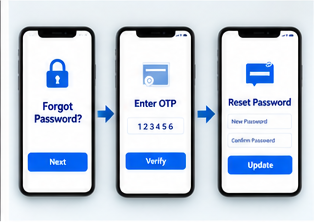
- Password forgotten • resettable through an registered mobile OTP across nearly all platforms
- PAN/Aadhaar match-up errors typically mean that your KYC information doesn’t align across different databases. You’ll need an update manually with your broker
- Two-factor authentication delay (or delays) OTP delayed SMS are typical at peak times. App-based authenticator solutions are more efficient when there is a need
- Account frozen because of inactivity Certain brokerages will freeze accounts after 12 months without transactions. Generally, reactivation requires an KYC reconfirmation
Demat Account Customer Care: When and How to Reach Out
Make sure you have your DP ID and Client ID in hand prior to calling any of the customer service linesSupport teams will ask for the ID first. Having the ID ready will cut your time on call roughly one-third. Many brokers prefer the in-app chat feature over telephone lines because call queues during peak hours may be over a period of time. In the event of an emergency (like an unsuccessful withdrawal of funds or a login warning that is suspicious emails tend to receive a recorded and traceable answer faster than a call, which could not be properly logged.
How to Close a Demat Account
Closing doesn’t happen in a flash It takes time, and many people are amazed by it. The process generally follows:
- Make sure your demat account has no shares (transfer or first sell all shares)
- Pay any due AMC dues
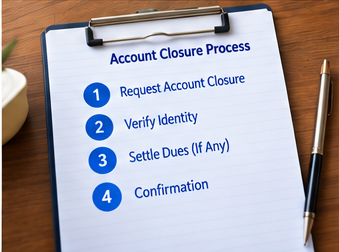
- Complete an Demat Account Closure Formula (usually available via the app of the broker or web site)
- Then wait for confirmation it typically takes between 7 and 15 working days, depending on the DP.
A thing to remember: the closing of your demat account will necessarily mean closing your trading account. Be sure to verify both, otherwise you could be charges for trading accounts that you thought was shut down.

Demat Account Refer and Earn: Is It Worth It?
The majority of brokers have Refer-and-earn schemes, which pay anything between Rs100 and Rs500 for each successful referrer who successfully accounts and opens. It’s an acceptable method to reduce your costs if you’re giving a recommendation to a friend. But, and here’s the point where I’m going to challenge the standard advice- do not let referral bonuses serve as the sole reason to choose an account with a broker. There have been people who choose the platform solely because of the referral link of a friend worked well. They find out six months later the customer service of the application really wasn’t the best. The bonus for referrals disappears within one week. Unsatisfactory support experiences after a crash in the market sticks with you for.
Demat Account Vs. trading account: What’s the difference
| Feature | Demat Account | Trading Account |
|---|---|---|
| Purpose | Secures shares or securities electronically | Places orders for buy/sell |
| Regulator link | NSDL or CDSL | Stock exchange (NSE/BSE) via broker |
| Charges | AMC and transaction fees | Brokerage per trade |
| Required for | Investments in holding | Trading |
A Quick, Honest Disclaimer
This information is meant to be general in nature and does not constitute personalised financial guidance. Charges, features and the regulatory requirements mentioned here are examples and subject to alteration. You should always confirm your current data with SEBI or your depositor, and also the official fee schedule of your broker before establishing or closing a bank account. For complete terms, refer to our Disclaimer pages.

Final Takeaway
Demat accounts aren’t difficult after you get rid of all the technical jargon. It’s an electronic locker that holds your stocks, and opening it now takes just a couple of only a few minutes instead of the 40-minute service at the branch I had to endure in the past. It’s all about looking beyond those “zero AMC” banner, the app’s stability over unstable hours, not simply comparing rates for brokerage as well as keeping your DP ID in case any time you require customer support. Make sure you have the fundamentals right, and everything else is taken care of by it by itself.